Bukangi shark Busan canal rescue
World / South Korea / Wildlife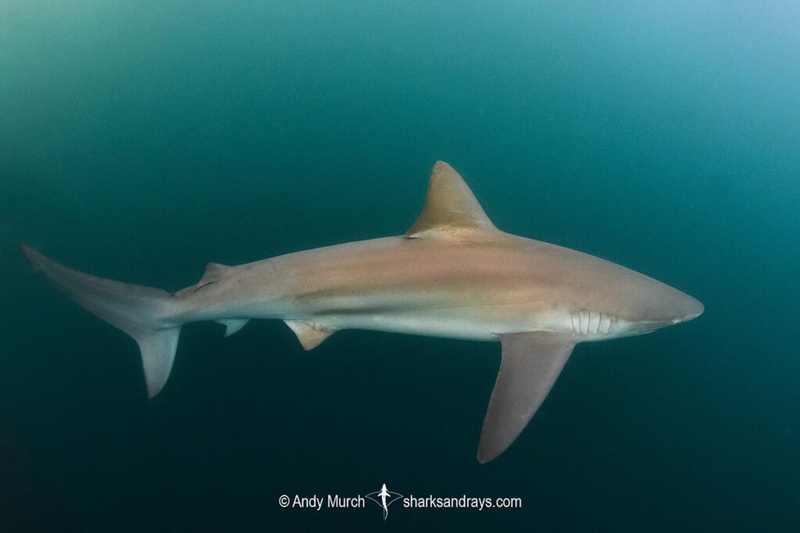
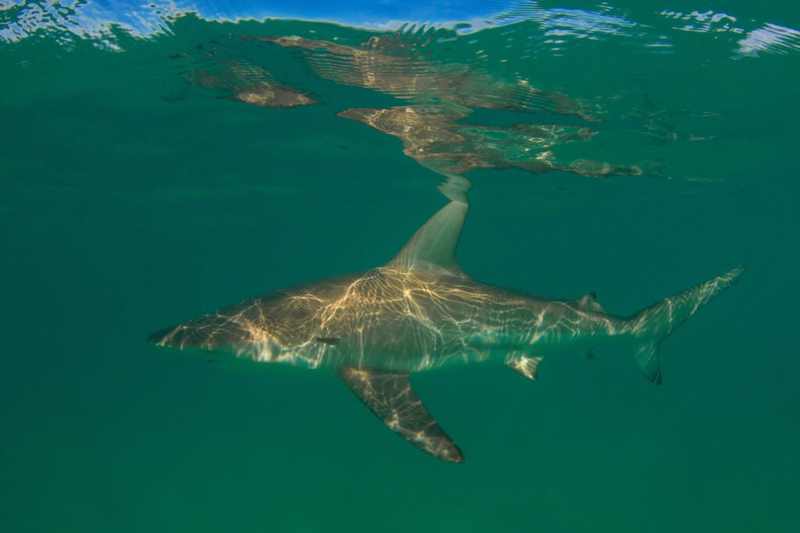
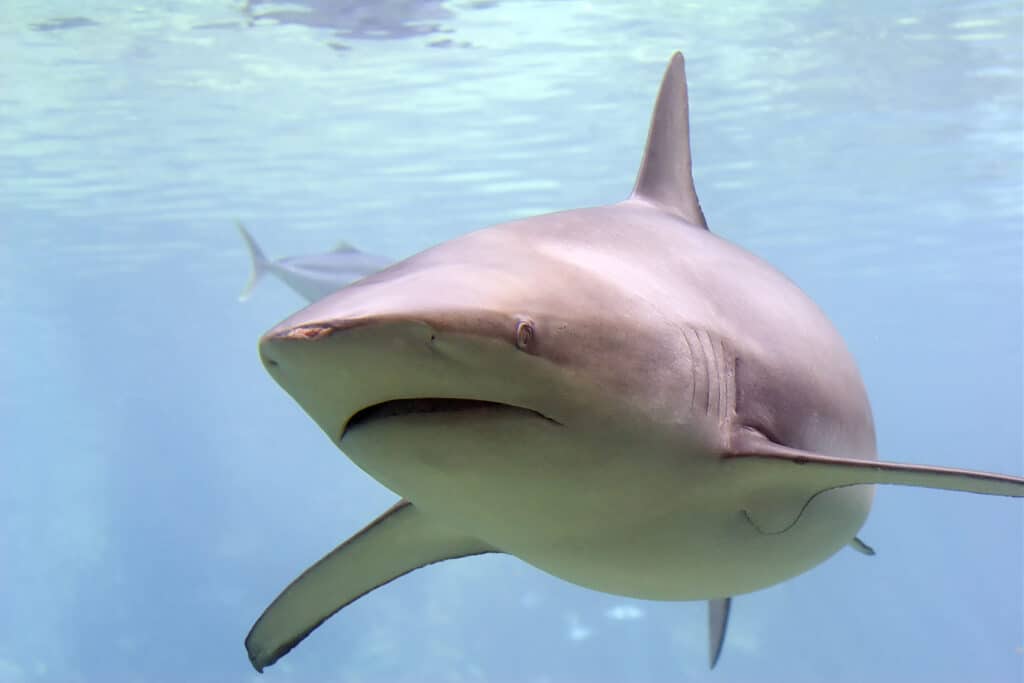
The Bukangi shark Busan canal rescue has failed again. A 3.5-meter shark with an honorary title, a citywide fan club, and nowhere else to go is back exactly where it started. Around noon on Saturday, October 3, 2026, Bukangi — the shark believed to be a bronze whaler that has lived in the artificial canal of Busan's North Port Waterfront Park since mid-September — crossed back over the barrier net that rescuers had spent all of Friday dragging into place, and returned to the stretch between Footbridge No. 4 and Footbridge No. 5 that it has called home for more than two weeks. The mechanism was almost insultingly simple: the rising tide lifted the water level, opened a gap beneath the net, and the shark swam over it. Two weeks of rescue planning, undone in a single day.
Why this matters
This is a climate story wearing a wildlife-spectacle costume. Scientists say warming seas are pushing prey — and the sharks that follow them — further north, and South Korea has seen a sharp rise in large-shark sightings this year. Bukangi is what that trend looks like when it parks itself in the middle of a megacity: a wild predator stranded in a 1.5-kilometer concrete channel, a 2.5-to-4-meter-deep bathtub between footbridges, in one of the busiest port cities on earth.
It is also a governance story. When a shark becomes an honorary city PR ambassador by Instagram poll, wildlife management stops being only biology and becomes marketing, municipal identity, and crowd control. And it is a story about attention itself: more than 600,000 people have traveled to stand at these railings in two weeks — Korea JoongAng Daily put the figure above 700,000 on October 3 — against the park's normal weekend baseline of about 2,000 visitors a day. Whatever happens next for the shark, that number says something about how modern crowds attach themselves to a living symbol.
Finally, it is a welfare story with a hard biological clock. The National Institute of Fisheries Science found Bukangi's activity and respiration stable, but no feeding has been observed since it arrived — and the shallow canal's water temperature is dropping fast. An animal that has not eaten in over two weeks, in water that is only getting colder, does not have forever.
How a shark became Busan's biggest celebrity
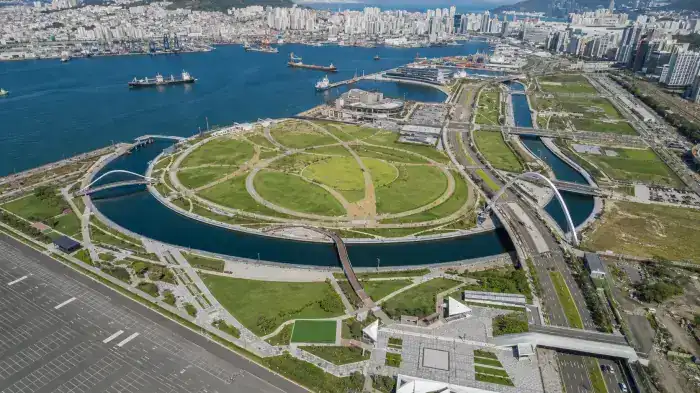
The timeline began at 8:57 AM Korea time on September 18, when the shark was first spotted in the canal at North Port Waterfront Park. Experts believe it chased prey into the channel — 1.5 kilometers long, 30 to 60 meters wide, barely 2.5 meters deep at low tide and 4 meters at high — and then could not find its way out.
The first rescue attempt came on September 29. Korea Coast Guard personnel and partner agencies spent 11:00 AM to 12:40 PM spraying water jets behind the shark to herd it seaward, then tried again for about an hour from 2:30 PM. The shark simply swam away from the jets. It was not going to be herded.
That same day, Busan made an unusual call: it named the shark an honorary city PR ambassador, after an Instagram poll in which 91 percent of roughly 8,000 voters said yes. The announcement post drew more than 1.05 million views. The name — Bukangi — comes from “Buk Hang,” the Korean name for North Port, plus the Korean suffix “-i.” The city had its mascot. Whether the mascot had a way out was another question.
The second rescue attempt arrived on October 2: a 50-meter-long, 6.8-meter-high net, dragged by five people on each side with Coast Guard vessels pulling the center, swept from Footbridge No. 4 toward Footbridge No. 6 near the canal exit. About 150 meters from the exit, the net snagged on the canal floor and the shark stopped advancing. The operation was halted around 5:40 PM, and the net was fixed in place about 100 meters inside the exit as a barrier — the plan being that Bukangi, now penned near the mouth, might simply leave on its own. Some 35,000 people came Friday to say goodbye. The goodbye was premature.
Two failed rescues, two different lessons
The water jets — herding an animal that does not herd
The September 29 water-jet operation revealed the core mismatch of the whole affair: you cannot treat a 3.5-meter pelagic predator like livestock. Water jets that would startle a fish did not frighten an animal that has spent two weeks learning this canal is safe. Bukangi swam away from the jets — the only direction it chose was its own.
The net — physics beat engineering
The October 2 net was serious hardware: 50 meters long, nearly 7 meters high, dragged by boats and a small army. It failed on geometry. In a canal that runs 2.5 to 4 meters deep, even a 6.8-meter net has slack, and slack plus a rising tide equals a gap. When the water came up around noon Saturday, the barrier stopped being a barrier. Bukangi circled the net, apparently looking for exactly that opening, found it, and crossed — returning to its old spot between Footbridges 4 and 5. The rescue's endgame was undone not by the shark's strength but by the tide's schedule.
The numbers behind the story
Put the figures in context and the scale of the phenomenon sharpens. Roughly 600,000 visitors in about two weeks against a normal weekend baseline of 2,000 a day is a 300-fold surge; about 480,000 of those arrived during the four-day Chuseok holiday alone. The Instagram poll that made Bukangi an ambassador drew 91 percent approval from some 8,000 voters — a landslide — and the post itself passed 1.05 million views, meaning the shark's fame reached roughly 170 times the number of people who voted. A 3.5-meter animal in water 2.5 meters deep at low tide is a shark longer than its habitat is deep — the canal, at 4 meters on high tide, barely clears it. And Friday's farewell crowd of 35,000 gathered to wave off an animal that had not actually left. The spectacle, at moments, has outrun the facts.
Who benefits, who is at risk, and what the critics say
Busan's tourism apparatus has clearly benefited: a waterfront park that normally draws 2,000 people on a weekend is now one of the country's most-visited outdoor attractions, and local businesses along the port are riding the wave. The city got a mascot with 1.05 million views for the price of an Instagram poll.
The risk sits with the shark. More than two weeks with no observed feeding, a shrinking temperature envelope in a shallow artificial canal, and daily crowds pressing the railings is a welfare equation that gets worse, not better, with time. NIFS's assessment — stable for now — is a snapshot, not a guarantee.
Critics see a spectacle problem. Animal-welfare voices argue the ambassador stunt turned a stressed wild animal into content, and that 35,000 people throwing a goodbye party for a shark that had not left reveals where the priorities drifted. The counterargument, heard from city officials, is that public affection is precisely what funds and motivates rescue: nobody spends two failed rescue operations and national attention on an animal nobody loves. Both things can be true. The question is whether the affection is serving Bukangi's exit — or just serving the audience.
The bigger current
Zoom out and Bukangi looks less like a fluke than a preview. Warmer oceans are redrawing the map of where marine predators hunt, and South Korea's surge in large-shark sightings this year fits a pattern scientists are documenting along coastlines worldwide: prey moves, sharks follow, and the places they surface are increasingly human ones — beaches, harbors, canals.
South Korea, notably, has a culture of turning escaped wildlife into national characters. Earlier this year, a zoo-escape wolf drew a presidential message of concern and even spawned a meme coin. Bukangi is the marine sequel. That instinct — to name, to poll, to claim the animal as “ours” — mobilizes attention and resources fast. But affection is not a rescue plan, and a poll is not a habitat. Cities from London to New York have run their own stranded-wildlife episodes; the ones that ended well ended because officials treated the animal as wildlife first and symbol second.
What happens next
Busan now plans to remove the net and let Bukangi leave on its own, with the National Institute of Fisheries Science monitoring. Three scenarios branch from here. The best case is the quiet one: the shark rides a high tide out through the exit under its own power, the way it came in — the outcome Friday's net was supposed to stage. The middle case is stasis: Bukangi settles back into its Footbridge 4-to-5 routine while autumn water temperatures keep falling, and the welfare clock — no feeding observed since September 18 — starts ticking louder, forcing a harder intervention. The worst case is a forced capture of a 3.5-meter shark in shallow water, an operation with real risk to both animal and handlers that nobody wants to attempt unless the alternative is worse.
The most likely path, by the logic of everything so far, is patient monitoring through the long holiday weekend — the city has stepped up patrols through Monday's National Foundation Day holiday — with the removal of the net returning the canal to its natural state and the exit left open. Busan named this animal its ambassador; that title now reads less like marketing and more like a duty of care. The shark that drew 700,000 visitors still needs to do the one thing no poll can vote for: swim out on its own.
Sources
- Reuters, “Shark remains stranded in South Korean canal after second rescue attempt ends,” Oct. 2, 2026
- Korea JoongAng Daily, “Busan shark slips past rescue net, returns to canal Saturday,” Oct. 3, 2026
- Also reporting: Reuters (Sept. 30), KBS News (Oct. 3), Yonhap News Agency/TV, Chosun Daily, National Institute of Fisheries Science, and Busan city statements.