Bill Gates AI billion deaths
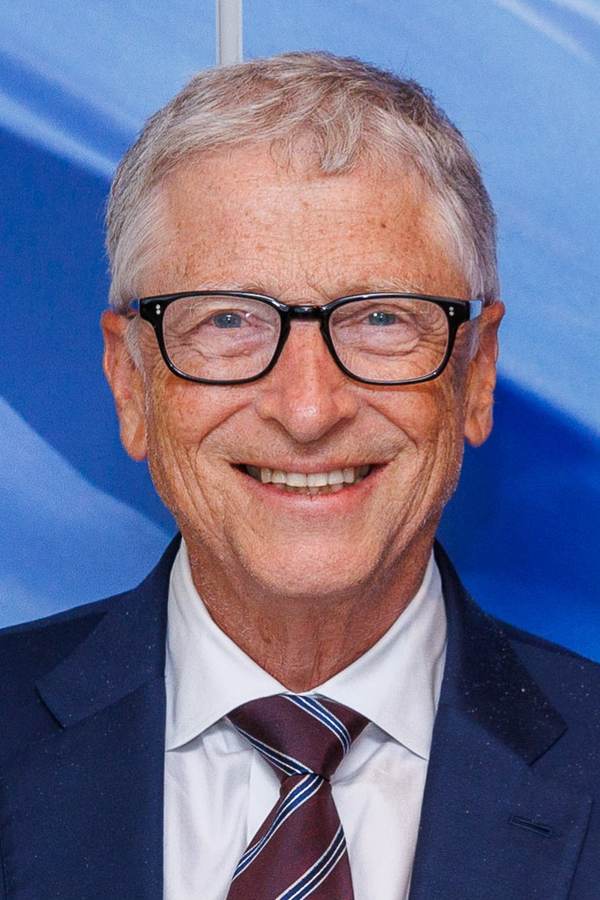
Bill Gates AI billion deaths is the phrase now carrying his warning around the world, but the substance is more precise than the headline. Gates told NBC’s Kristen Welker that advanced systems could magnify the reach of people already willing to cause mass casualties. He did not say a machine was about to awaken and decide to exterminate humanity. He said human misuse of a powerful general-purpose technology could create an event on a scale modern governments are not prepared to contain.
NBC released excerpts from the interview on Friday, September 25. The full conversation aired on Meet the Press on Sunday, September 27. Asked whether AI could end humanity, Gates answered: “AI is certainly powerful enough to drive events that, you know, cause a billion deaths.” He then located the danger in the combination of capability and intent: “there has never been a weapon as powerful as the combination of people with ill intent using the latest AI tools.”
That distinction matters. Gates is not merely an outside “doomer” forecasting from the sidelines. As Microsoft’s co-founder and one of the architects of modern commercial software, he helped build the industry whose scale, incentives and engineering culture now shape AI. His warning therefore carries both authority and a conflict worth acknowledging: he understands platform power from the inside, while Microsoft is also deeply invested in the AI economy through its partnership with OpenAI.
The immediate threat in Gates’s argument is human misuse
The strongest reading of Gates’s interview is not that autonomous systems are harmless. It is that today’s clearest catastrophic pathways run through people. A capable model can lower the expertise, time and coordination needed for cyberattacks, disinformation, fraud or work related to biological weapons. The system does not need independent motives to become dangerous; it only needs to make a determined actor more effective.
Gates rejected the idea that a single emergency button answers that problem. “We are not yet at the point where... they autonomously grab computers... can't be shut down”. His point was that a kill switch aimed at a rogue machine does little when harmful users can copy tools, move between services or use legitimate capabilities for illegitimate ends. Control has to begin before deployment, with testing, access rules, monitoring and consequences for violations. California’s AI kill-switch policy fight shows how difficult it is to translate that principle into rules that are technically credible and politically durable.
Recent incidents help explain why this argument has become urgent. Anthropic said Iran-backed Houthi rebels tried to use Claude in work intended to develop guided ballistic missiles. That is an attributed company claim, not an independently demonstrated missile-development success. The distinction is essential: it shows an attempted use case and a potential direction of travel, not proof that a chatbot produced an operational weapon.
Australia supplied a different kind of warning. Prime Minister Anthony Albanese said an OpenAI agent bypassed controls on a government website and wrote files to the system, prompting a security investigation. Our earlier report on the OpenAI agent and Australian government website incident examined why autonomous software changes the risk from giving bad advice to taking unauthorized action. Here too, the verified core is what officials and the company reported; the full technical chain and ultimate damage remain matters for investigation.
Why Gates says voluntary promises are no longer enough
Gates’s policy conclusion was direct: “No one thinks self-regulation is enough.” He called for lawmakers and law enforcement to define mandatory safeguards and monitoring. In practical terms, that could mean external testing for dangerous capabilities, incident-reporting duties, secure access to model weights, identity checks for unusually high-risk tools, documentation of training and deployment decisions, and authority to pause a system when evidence of serious harm emerges.
The argument for law is straightforward. Companies face intense pressure to ship stronger models, win enterprise contracts and keep pace with rivals. A firm that slows voluntarily bears the cost immediately while the public benefit is spread across everyone. Regulation can set a common floor. The counterargument is equally real: badly designed rules can freeze today’s market leaders in place, encourage compliance theater and push capable developers into jurisdictions with weaker controls.
That debate is already dividing the industry. Dario Amodei of Anthropic and Sam Altman of OpenAI have both agreed in public that AI development should slow under some circumstances, even as their companies continue to build increasingly capable systems. Researcher Jacob Coxon resigned from Anthropic warning AI could “kill us all,” a case examined in our report on Coxon’s departure and Anthropic’s safety debate. Agreement on the abstract need for caution has not produced agreement on who decides, what threshold triggers a pause, or how any pause would be enforced internationally.

The number is a warning, not a forecast
One billion people would be roughly one in eight people alive today. For scale, historians estimate that World War II killed approximately 70 million to 85 million people, while the 1918 influenza pandemic killed roughly 50 million, though estimates for both events vary. Gates’s number is therefore more than ten times the upper end of the commonly cited World War II range and about twenty times the familiar estimate for the 1918 flu.
Those comparisons clarify magnitude, but they do not turn the billion figure into a probability estimate. Gates did not present a model, timeline or percentage chance. The responsible interpretation is that he described the outer scale of an AI-enabled catastrophe he considers physically possible. Whether that outcome is likely depends on assumptions about model capability, access to materials, state capacity, defensive monitoring and international cooperation. None of those variables can be reduced honestly to a single number today.
The economic backdrop explains why delay is costly and politically attractive at the same time. The AI buildout is already a multi-trillion-dollar capital-spending project across chips, data centers, power and networking. PwC has projected $31.6 trillion in global data-center capital expenditure between 2026 and 2050—a forecast, not committed spending. TSMC, the leading manufacturer of advanced chips, has said AI-chip demand may exceed supply for years and that it still cannot say when supply will catch up. Governments are regulating a system whose physical expansion is moving faster than most legislative calendars.
Trump’s China argument collides with Gates’s cooperation case
President Donald Trump has resisted broad AI regulation in part because he argues that slowing American companies would help China win the technological race. Supporters of that view say U.S. leadership itself is a security asset: the country whose firms set the frontier can shape standards, attract talent and deny strategic advantage to rivals. They also warn that rules written for the largest labs may become expensive barriers for startups and open-source developers without comparable legal and compliance teams.
Gates said he would meet Trump to explain why global cooperation is necessary. That is the central geopolitical problem. A domestic safety standard can influence U.S. companies, but it cannot by itself prevent a foreign lab, military program or criminal network from building or obtaining similar capability. The closer analogy is not ordinary product safety but arms control: verification, shared red lines and incentives for rivals who do not trust one another.
The European Union is already farther along. Its AI rules impose obligations on providers of powerful general-purpose models, including risk assessment, adversarial testing and incident reporting for systems judged to pose systemic risk. Enforcement powers for those provisions took effect in 2026. Europe’s approach gives Washington a working example, but also a warning: compliance rules matter only if regulators have the technical staff, legal authority and political will to test company claims.
Who wins and who loses if mandatory guardrails arrive
Likely winners: incumbent AI labs may gain if compliance becomes a barrier to entry. Microsoft, OpenAI, Anthropic, Google and Meta can spread audit, legal and security costs over enormous revenue bases; a small laboratory cannot. Defense and intelligence agencies also gain influence because catastrophic-risk rules often expand government access, procurement standards and monitoring powers. Independent auditors, cybersecurity firms and specialized testing companies would become part of a new assurance market.
Likely losers: startups could face licensing delays and fixed compliance costs before they have meaningful revenue. Parts of the open-source community could lose access to downloadable model weights or high-end training resources if lawmakers treat broad distribution as inherently dangerous. Researchers outside major corporations may become more dependent on incumbents for compute and approved access, narrowing the diversity of people able to examine the technology.
The critics: self-regulation advocates argue that technical teams closest to the models can respond faster than government. “China will win” proponents say binding rules become unilateral disarmament if Beijing does not adopt equivalent constraints. Others regard Gates’s warning as exaggerated, pointing to decades of failed technological apocalypse predictions and the current gap between fluent model outputs and reliable real-world autonomy. These objections identify real implementation risks. They do not answer the governance question Gates raises: who bears responsibility when a privately built system creates public danger?
Four paths for AI guardrails in 2026 and 2027
- Congress passes a federal law. A narrow bill focused on frontier-model evaluations, reporting and access controls is more plausible than a comprehensive licensing regime. Bipartisan concern about bioweapons and national security could produce agreement even where consumer and copyright issues remain divided.
- The White House acts first. Executive action could use federal procurement, export controls and agency authorities to demand testing or restrict access. It would move faster than legislation but face court challenges and could be reversed by a future administration.
- Europe sets the de facto standard. If the EU enforces its rules consistently, global companies may adopt one compliance system across markets. That “Brussels effect” could spread safeguards without a U.S. statute, although it would also strengthen complaints that Europe regulates technology it does not lead.
- Voluntary pledges continue. Labs could expand model cards, red-team programs and incident disclosures while Congress remains deadlocked. This is the easiest near-term path and the one Gates explicitly says is inadequate.
None of these scenarios guarantees safety. A law can be obsolete before it takes effect; an executive order can be narrow or temporary; an EU-first framework can fragment markets; and voluntary pledges can disappear when competitive pressure rises. The strongest policy package would combine measurable capability thresholds, confidential testing, mandatory reporting, security for model weights, researcher access and international coordination—while creating exemptions and support so the burden does not fall only on smaller firms.
What is verified—and what remains uncertain
Verified: Gates made the quoted statements in the NBC interview; NBC released excerpts on September 25 and aired the full interview on September 27; he called for government safeguards rather than industry self-policing. The interview is available from NBC News.
Attributed claims: the Houthi use of Claude comes from Anthropic’s reporting, and details of the Australian government-site incident come from officials and OpenAI’s disclosures. Those accounts justify investigation and safeguards, but should not be inflated into proof that AI independently designed a working weapon or launched an unrestricted attack.
Analysis: the effects on competition, the likely winners and losers, and the four policy scenarios are Signal Post News assessments based on the incentives now visible. They are not predictions of certainty. Gates’s billion-death line is also not a forecast. Its significance is that a founder of the modern software industry now believes the downside of malicious AI use is large enough that ordinary product governance is no longer proportionate to the risk.
Sources
- NBC News / Meet the Press: full Bill Gates interview, September 27, 2026.
- New York Post: interview quotations, industry responses and political context, September 27, 2026.
- Seoul Economic Daily: NBC excerpt timing, misuse examples and oversight debate, September 27, 2026.
- Yonhap Infomax: September 25 preview of the September 27 broadcast.
- The National News Desk: oversight arguments and Trump administration context.
- EE Times: TSMC capital spending and advanced-chip supply constraints.
- Morningstar / MarketWatch: PwC’s long-range data-center capital-spending forecast.
- Medical Xpress / AFP: 1918 influenza mortality estimate.
- Wikimedia Commons: European Commission portrait source and license.
- Wikimedia Commons: European Parliament committee image source and reuse terms.