Belgium nationwide strike budget deadlock
Trains cancelled, schools closed, broadcasts dark — and the prime minister just cancelled his own State of the Union because his coalition cannot agree on a budget. Belgium's debt arithmetic has finally collided with its politics.
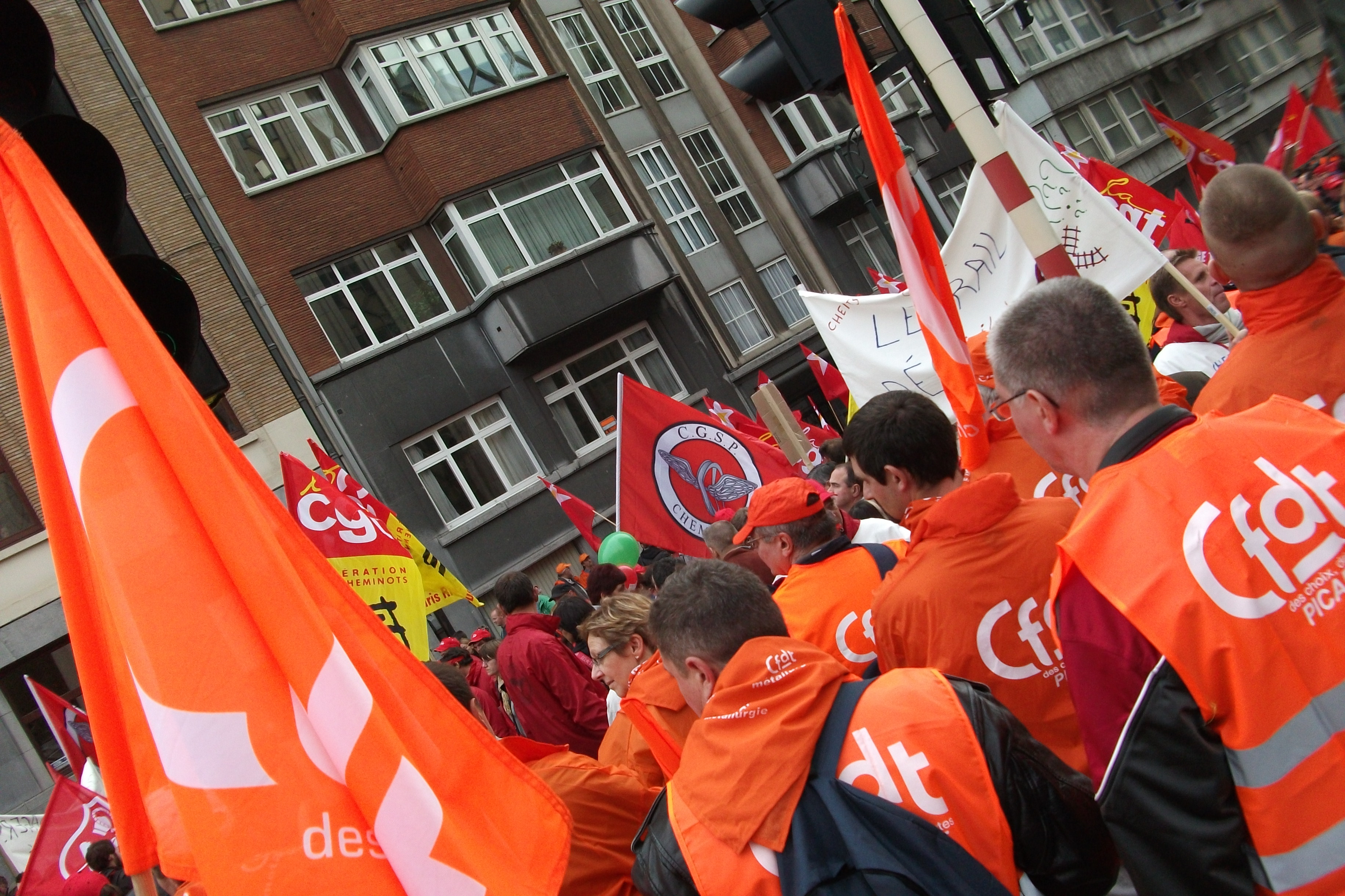
Belgium's public sector was partially shut down on Monday as unions staged a second day of nationwide strike action against planned government budget cuts — with rail services, public transport, public broadcasting, and schools all disrupted. The strike is unfolding against a deepening political crisis: over the weekend, Prime Minister Bart De Wever's coalition partners failed to agree on a new federal budget, forcing the Flemish right-wing leader to cancel his planned State of the Union address to parliament on Tuesday while talks continue. Belgian media now report the budget deal could slip to late October or early November — and warn that a prolonged deadlock could strain the coalition's cohesion.
Why this matters
On the surface this is a familiar Belgian tableau — unions strike, trains stop, a government haggles. What makes this round different is the convergence of two crises that are usually kept apart: a fiscal emergency and a political one, arriving at the same time and amplifying each other. De Wever said on Thursday that painful budget measures were needed now to avert a looming debt and interest-cost spiral that would otherwise leave future generations with a heavy bill. That is the language of a prime minister who believes the arithmetic is non-negotiable. The unions' answer, delivered on the streets of Brussels on Friday by thousands of protesters and in Monday's shutdown, is that the distribution of the pain is entirely negotiable — and that workers will not pay for a debt crisis they did not create.
The cancelled State of the Union is the detail that elevates this from labor dispute to governing crisis. A prime minister does not cancel his set-piece address to parliament — the annual ritual in which a government narrates its purpose — unless he has nothing he can safely say. De Wever cannot stand before parliament on Tuesday and describe a budget that does not exist, agreed by a coalition that is openly divided. The empty podium is the story: Belgium is being governed, right now, by a coalition that cannot agree on what the government is for.
And there is a European dimension that travels beyond Belgium's borders. Belgium is not an outlier; it is an early case of a condition spreading across the continent's heavily indebted democracies — France is simultaneously in its own budget crisis, and the eurozone's fiscal rules are tightening around governments that spent the last decade borrowing. How Brussels handles the collision between debt arithmetic and street politics is a preview of arguments coming soon to Paris, Rome, and beyond.
What happened: from Friday's march to Monday's shutdown
The sequence began on Friday with an initial mass protest: thousands of demonstrators filled Brussels to oppose the planned budget cuts. The march ended with a small group clashing with police — a coda that drew the headlines but should not obscure the main event, which was the scale of the peaceful turnout. No large-scale demonstration was planned in the capital for Monday; instead, the unions shifted tactics from marching to stopping — a second day of nationwide strike action aimed at the machinery of daily life.
The effects were broad. Rail services were disrupted, public transport thinned, public broadcasting hit, and schools affected as public sector workers walked out. In a country where the public sector is one of the largest employers and the rail network is the circulatory system of the Brussels-centered economy, a "partial shutdown" is not a symbolic gesture — it is hundreds of thousands of commutes cancelled, classes untaught, and broadcasts unmade. The unions chose their targets well: these are the services whose absence the government cannot ignore and whose workers are hardest to replace.

Background: the budget deadlock inside De Wever's coalition
To understand the deadlock, start with the coalition itself. Bart De Wever, the Flemish right-wing leader, heads a multi-party federal coalition of the kind Belgium specializes in — ideologically broad, linguistically split, and held together by the shared interest in governing rather than by shared convictions about what government should do. Coalitions like this can survive disagreement about policy; what they cannot survive is disagreement about arithmetic, because a budget is the one document where every disagreement becomes a number.
Over the weekend, the partners failed to reach agreement on the new federal budget. The prime minister's office confirmed the failure and announced the cancellation of Tuesday's State of the Union address while talks continue. Belgian media report the deal could now slip to late October or early November — a delay of weeks that matters because budgets are time-sensitive instruments: spending plans, tax measures, and the credibility of the government's fiscal path all degrade while the talks drag on.
De Wever's Thursday framing is worth quoting precisely because it reveals his strategy: painful measures now to avert a debt and interest-cost spiral for future generations. This is the classic "responsible adult" pitch — short-term pain as intergenerational duty. It is also, politically, a way of moving the argument from whether to cut to who gets cut, and of casting opponents as mortgaging their children's future. The unions' counter-framing is equally deliberate: the cuts target public services and workers' conditions while the debt itself was run up by decades of political choices — bank bailouts, tax expenditures, pandemic spending — that workers never voted for line by line. Both framings are honest about the arithmetic and dishonest about the agency. The debt is real; so is the question of who pays.
Belgium's chronic condition: why budget fights keep recurring
None of this is new, and that is the point. Belgium has one of the highest public debt loads in the eurozone — a legacy of the 1980s and 1990s that the country spent the 2000s slowly working down before the financial crisis, the pandemic, and the energy crisis pushed the ratios back up. The structural problem is that Belgium's federal system multiplies veto points: regions, communities, and language groups each defend their spending, while the federal government holds the debt. Every budget negotiation is therefore a negotiation between levels of government as well as between parties, and every coalition is a temporary truce in a permanent war over who bears the adjustment.
Compare the neighbors. France is in the middle of its own budget crisis — a €54 billion adjustment fight that has already consumed political capital in Paris. The Netherlands, Germany, and Italy are all navigating the same eurozone fiscal framework with varying degrees of pain. Belgium's distinctiveness is not the debt; it is the political system's low tolerance for sustained disagreement. Belgian coalitions are famously difficult to form — the country once went 541 days without a federal government — and famously fragile once formed. A budget deadlock that would be a bad month in Paris can be an existential threat in Brussels, because the coalition has fewer reserves of trust to draw on.

Who wins, who loses — and what the unions are really pricing
Start with the ledgers. If De Wever gets his budget through with the painful measures intact, the winners are bond markets, the National Bank's credibility hawks, and future taxpayers who inherit a stabilized debt path; the losers are public sector workers facing cuts to pay, pensions, or staffing, and the users of the services those workers provide. If the unions force a retreat, the winners are the workers who keep their conditions and the politicians who avoid a confrontation; the losers are the debt trajectory itself — and, eventually, the same workers, if a disorderly fiscal adjustment arrives later under market pressure rather than democratic choice.
But the strike is pricing something beyond the budget lines. Belgian unions are among the most organized in Europe, with deep roots in the public sector, and their strikes are rarely about a single measure — they are about the direction of travel. What the unions are really contesting is De Wever's premise: that the debt spiral is a law of nature requiring sacrifice, rather than a political choice about whose sacrifice. Friday's thousands in Brussels and Monday's empty platforms are the unions demonstrating the one asset negotiations cannot manufacture — the capacity to stop the country. That capacity is also their vulnerability: every strike day costs workers wages and public sympathy, and overplaying it risks turning a dispute about fairness into a dispute about disruption.
The critics on each side deserve their hearing. Fiscal hawks argue, with some justification, that Belgium's debt dynamics really are deteriorating — interest costs compound, the demographic bill for pensions is coming due, and delay only raises the eventual price. Union critics reply, also with justification, that "painful measures" is doing a lot of euphemistic work, that austerity's track record in Europe is one of shrinking economies chasing shrinking deficits, and that a government led by the Flemish right has ideological reasons to prefer a smaller public sector that go beyond the debt math. The neutral observer's verdict: the arithmetic constrains the options, but it does not dictate the distribution. Somebody has to pay; the fight is — legitimately, democratically — about whom.
What happens next: three scenarios
1. A late-October deal, ugly but done. The base case: the coalition grinds out a compromise in the next two to three weeks — each partner gets a face-saving win, the cuts are softened at the edges, De Wever reschedules his address and declares victory. The unions claim the strike forced concessions; the government claims it held the fiscal line. Belgian media's late-October/early-November timeline points here. The cost is measured in credibility: every week of deadlock teaches voters that the coalition cannot govern smoothly, and teaches the unions that strikes work.
2. Prolonged deadlock strains the coalition to breaking. Belgian media already warn that an extended impasse could put coalition cohesion under strain — and in Belgium, "strain" is a euphemism with history. If the partners cannot bridge the gap by November, the scenarios darken: a partner walks out, the government falls back on a caretaker basis, and Belgium drifts toward the kind of formation crisis it is famous for. The unions would likely escalate with further strike days, having learned that pressure produces movement. Watch the language from coalition partners in the coming days: the shift from "difficult talks" to "fundamental disagreement" is the tell.
3. The street decides. The least predictable path: the strike wave grows beyond the unions' control — Friday's police clashes were a small foretaste — or public opinion swings hard behind one side, forcing a political resolution that the negotiating table could not produce. Belgium's strike tradition means the public is accustomed to disruption; it also means the public has a finely tuned sense of when a strike is justified and when it has gone too far. If the shutdowns drag into weeks, sympathy could curdle — which is precisely the government's incentive to wait the unions out, and the unions' incentive to settle while their leverage peaks.
The honest forecast is that scenario one remains most likely — Belgian coalitions are resilient precisely because everyone knows the alternative is worse — but the margin for error is thinner than usual. A prime minister who cancels his State of the Union is a prime minister out of maneuvering room. The next two weeks will show whether De Wever can manufacture more of it, or whether Belgium's debt arithmetic has finally produced a political bill that no coalition can pay.
Related coverage
Sources
- Reuters — Belgium strike partly shuts public sector as budget deal delayed (October 12, 2026; reporting by Charlotte Van Campenhout, editing by Aidan Lewis)