World / Europe — One hundred people were arrested in Barcelona on Saturday evening after an anti-system rally at Plaça de Catalunya turned to looting and fires — around a quarter of them minors, officials said.
BARCELONA — One hundred people were arrested in Barcelona on Saturday evening after a rally called on social media under an “anti-system” banner descended into looting, arson and running clashes with police around Plaça de Catalunya, the square that joins the old town to the city’s main shopping avenues. Hooded demonstrators, most of them young and dressed in black, kicked in shop windows, emptied stores and set fire to street furniture as Saturday shoppers and tourists scattered. Núria Parlon, the interior minister of the Spanish region of Catalonia, said around 25 percent of those arrested were minors. More than 30 fires were set and 14 stores were vandalised or looted, she said, in a district packed with weekend crowds.
Track the wider protest picture live: Live Global Trackers — conflicts and unrest.
What happened, hour by hour
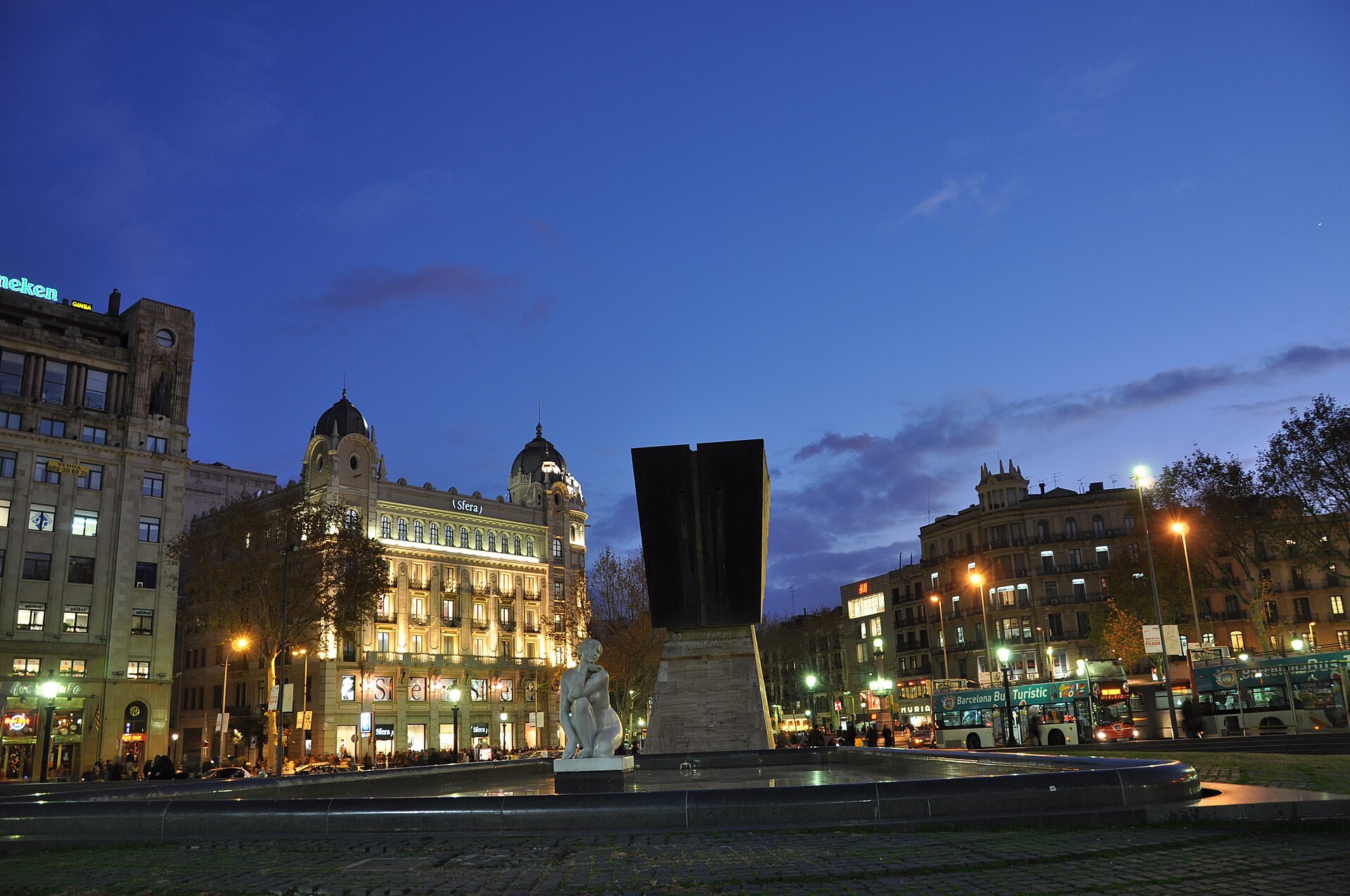
The gathering had been promoted for days in social media posts calling people to a movement “against the system”. The posts borrowed the slogan “Institut Indignats” — Catalan for “indignant high-school students” — a direct echo of the “Lycées Indignés” label used to rally students in the school protests that have swept France in recent weeks. By Saturday afternoon, groups of young people, many with their faces covered, had converged on Plaça de Catalunya, a few metres from a housing-rights encampment that has occupied part of the square for weeks and from some of the most valuable retail frontage in Spain.
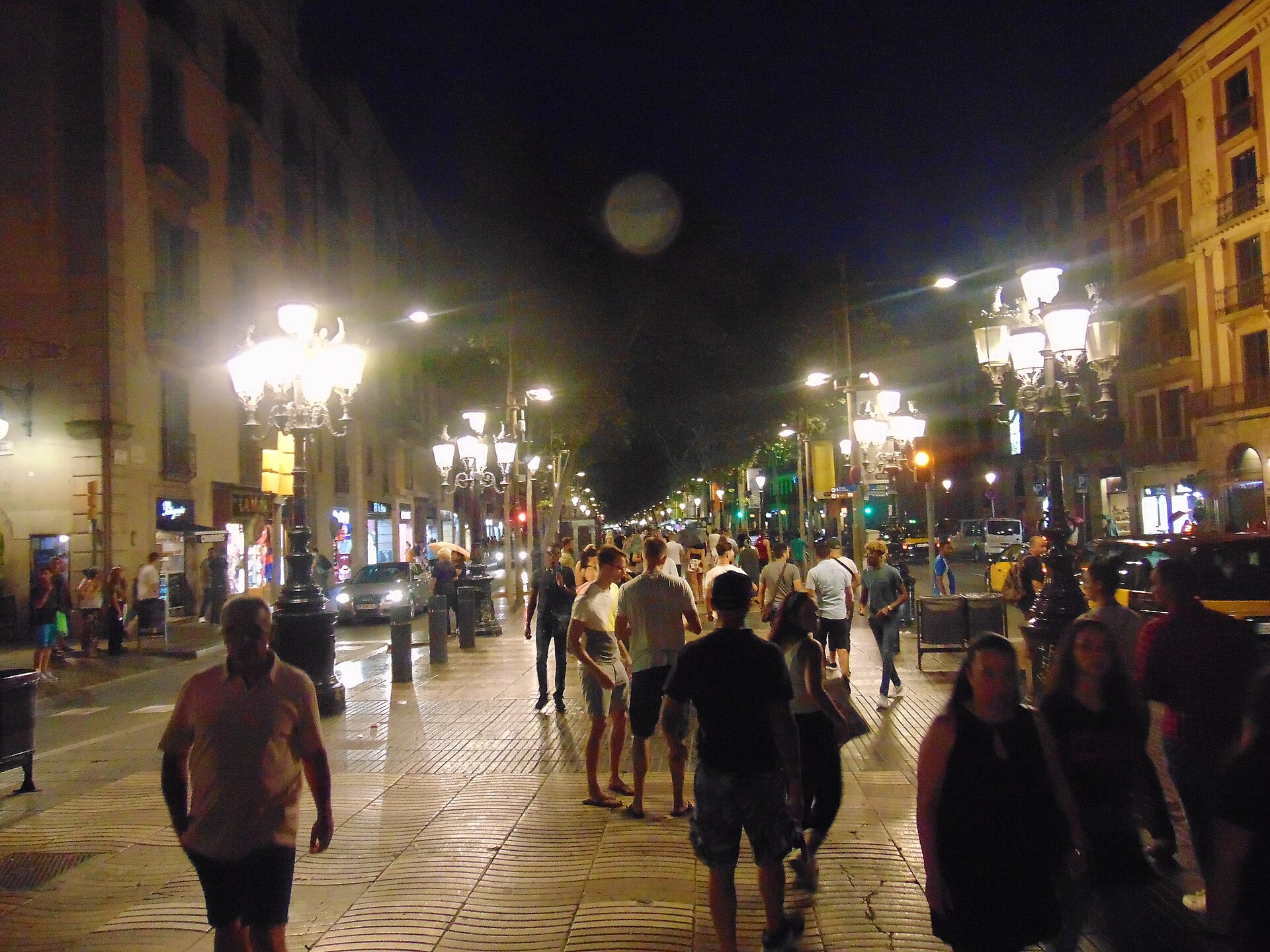
According to the Catalan police, the Mossos d’Esquadra, the trouble began with damage to street furniture and quickly escalated. Demonstrators hurled stones and other objects at officers, who responded with charges to break up the crowd. As police pushed into the streets around the square — La Rambla, Portal de l’Àngel and Ronda Universitat — the crowd splintered into smaller groups that smashed windows and forced their way into shops. A PC Componentes electronics store on Ronda Universitat was among the businesses assaulted, Spanish media reported. Barricades built from rubbish containers, bins and motorcycles were set alight near Vergara/Bergara street, sending smoke across the Eixample grid.
Some of the most widely shared images of the night were not of the clashes but of the people caught inside them. Department stores and chains, including El Corte Inglés, pulled their shutters down with customers still inside to keep looters out, leaving shoppers trapped behind the blinds until staff judged it safe to let them out. Some shops boarded up their windows with wooden panels mid-evening. The Mossos advised the public to stay away from the Plaça de Catalunya area while the operation continued, and the Guàrdia Urbana restricted traffic around the square and the neighbouring Plaça Universitat.
The official response
Parlon, who briefed reporters as the arrests mounted, called the night a “mirror effect” — her term for unrest in one European country being copied, almost move for move, in another — and pointed to the recent agitation in France and Italy. She said the 100 arrests included about 25 minors, a figure that immediately shifted the argument from policing to parenting. More than 30 fires and 14 looted or vandalised stores was her accounting of the damage; a clean-up and a fuller damage assessment were expected to run into Sunday.
Barcelona’s mayor, Jaume Collboni, was blunter. The vandalism “will not go unpunished”, he said, promising “zero tolerance” and announcing that the city council would join the legal proceedings against those responsible. Collboni, who said more than 600 young people had taken part in the disturbances, also warned that the legal consequences would reach the guardians of any minors involved — a signal that parents, not only the teenagers in custody, should expect to hear from a judge. He framed the night as “gratuitous violence and vandalism” rather than protest, a distinction the city government repeated through the evening.
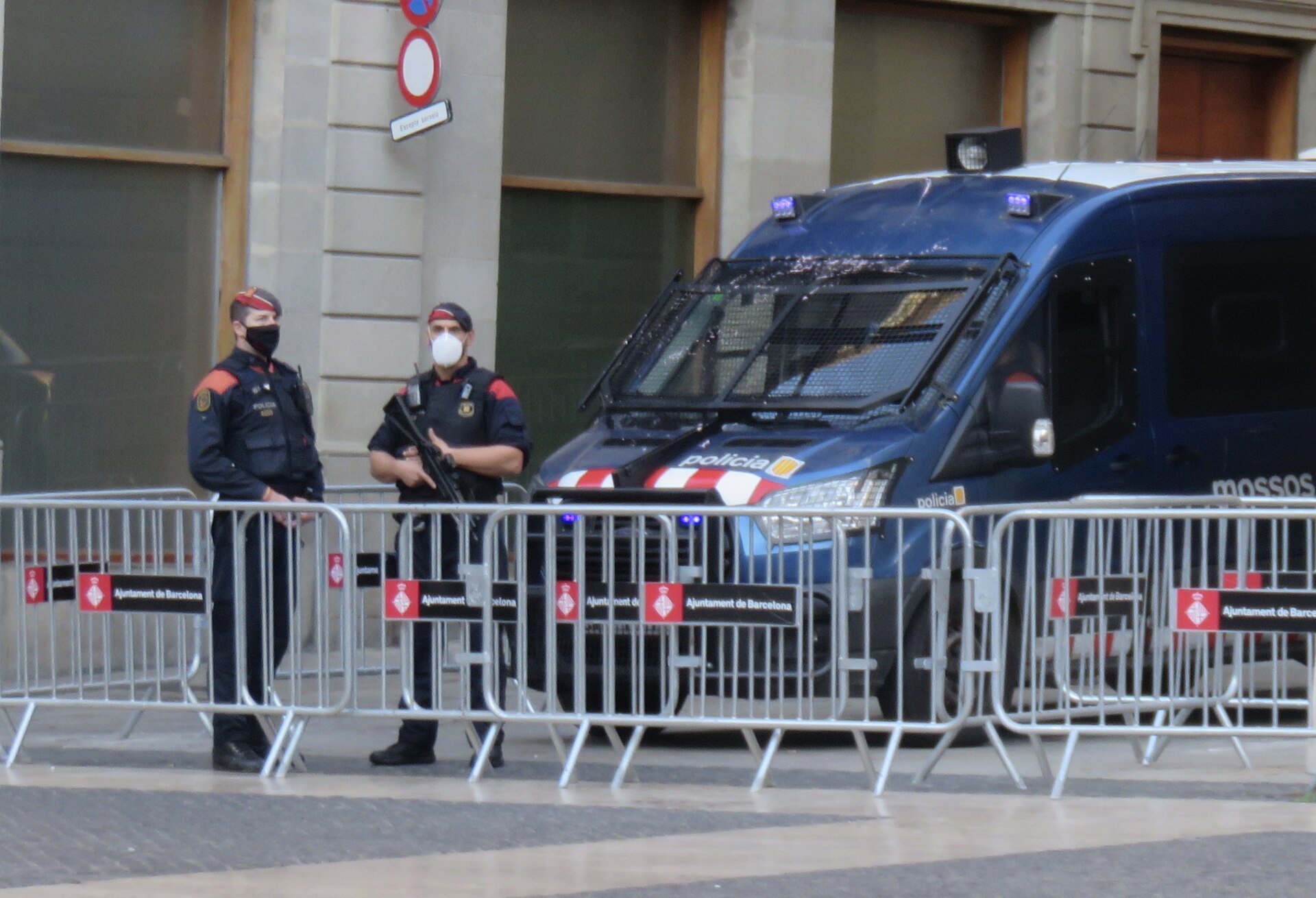
Police reporting via the EFE news agency added that officers were pelted with stones and blunt objects during the charges, and that injuries were possible on both sides; no confirmed injury toll had been published by Saturday night. What is not in dispute is the scale of the deployment and the arrests, which made Saturday one of the largest single-night detention operations in central Barcelona in recent years.
Why this matters: a slogan that crossed a border
The most significant detail of the night is also the smallest: a hashtag. “Institut Indignats” is not a party, a union or a movement with a headquarters. It is a translation — a French student-protest slogan re-rendered in Catalan and pushed through the same social platforms French teenagers have used for weeks. Saturday in Barcelona showed how fast that kind of mobilisation now travels. There was no organising committee for the police to negotiate with, no march route agreed in advance, and no leadership that could call the crowd off once windows started breaking. The call was a mood — against the system, in the posts’ own words — and a time and a place.
Local reporting linked the turnout to the same grievances simmering under the square: a housing encampment protesting Barcelona’s rents stands at Plaça de Catalunya, and Spanish coverage of the rally pointed to anger over the cost of housing and living conditions among the young people who answered the call. Spain’s housing shortage and the approach of a snap general election on November 29 have raised the political temperature nationally. None of that explains the decision to loot an electronics store or burn a barricade of motorcycles — and city officials were careful to separate grievance from violence — but it does explain why a vague slogan found an audience within days of being posted.
For Barcelona’s government, the economics are as uncomfortable as the politics. The streets hit on Saturday — La Rambla, Portal de l’Àngel, the Ronda Universitat — form the retail heart of a city that sells itself to visitors as safe, open and prosperous. Fourteen looted stores and a square full of smoke on a Saturday evening is an image the tourism industry will spend weeks trying to displace, and the fact that roughly a quarter of those arrested were minors guarantees the story a second life: in courtrooms, in parliament and in the argument about what, if anything, platforms owe the public when a call to gather turns into a call to smash.
Context: Spain has seen this film before
Barcelona is no stranger to nights like this. In February 2021, the jailing of the rapper Pablo Hasél triggered five consecutive nights of protests in which shops on Passeig de Gràcia were looted, barricades and motorcycles burned and windows smashed as far as the Palau de la Música. The choreography on Saturday — black-clad groups, burning containers, police charges, a famous shopping avenue as the stage — was recognisably the same, even if the trigger was entirely different. What has changed since 2021 is the trigger’s origin: not a court case in Spain, but a slogan imported from a neighbouring country’s school protests, amplified by the same feeds Spanish teenagers scroll every day.
Parlon’s “mirror effect” remark suggests officials across Europe are drawing the same conclusion. France’s recent student unrest and disturbances in Italy have each been followed, within days, by copycat calls elsewhere. Policing a mirror is harder than policing a movement: the organisers may be anonymous, the participants very young, and the fuse very short — Saturday’s rally moved from posts to fires in the space of an afternoon.
What happens next
Those arrested face proceedings for public disorder, theft and damage, with minors routed through the juvenile system — and, if Collboni keeps his word, their guardians facing legal consequences of their own. The city will personify itself in the cases, which usually means a long paper trail of damage claims against identifiable defendants. Shopkeepers were expected to begin counting losses on Sunday, and the total will sharpen the political argument: the opposition will ask how a publicly advertised gathering was allowed to become a looting spree in the most policed square in Catalonia, while the government points to the speed of the mobilisation and the youth of the crowd.
The larger question is whether Saturday was a one-off or the start of a run. The French protests that inspired the slogan have lasted weeks. If “Institut Indignats” posts appear again, the Mossos will have to decide whether to flood the square pre-emptively — with all the images that produces — or hold back and risk a repeat. Either way, Saturday’s 100 arrests, 30-plus fires and 14 looted stores have already made Barcelona the latest dateline in a European autumn of youth unrest that no single city’s police force can switch off.
Sources
- Reuters, “Arrests in Barcelona after ‘anti-system’ rioters loot shops, set fires”, October 24, 2026.
- EFE reporting on the Mossos d’Esquadra operation, October 24, 2026.
- Demócrata, “Saqueos y barricadas en el centro de Barcelona”, October 24, 2026.
- Statements by Núria Parlon (Government of Catalonia) and Mayor Jaume Collboni, October 24, 2026.