Barbera Thornhill
Barbera Thornhill: Trump's New Trafficking Ambassador, and the Portrait Everyone Is Asking About
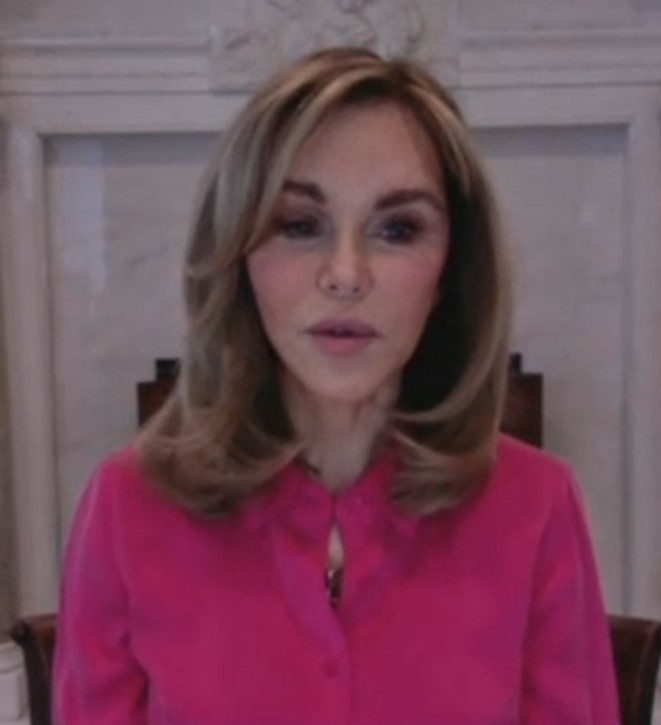
The photograph arrived the way Washington announcements do now: as a welcome post on social media. Assistant Secretary of State Riley Barnes shared the official portrait of Barbera Thornhill on X as she assumed leadership of the Office to Monitor and Combat Trafficking in Persons, the State Department office known as J/TIP. Within hours, the portrait had escaped the usual audience for personnel news and was circulating on its own, with users asking whether the image was genuine or had somehow been altered. The short answer, based on its source, is that the portrait is the department's real official portrait of its new ambassador — an unremarkable fact that nonetheless became the story of her first day.
Why this matters
Behind the viral moment sits a serious job. The ambassador-at-large for trafficking in persons is the U.S. government's senior diplomat on human trafficking: the official who leads the annual Trafficking in Persons (TIP) Report, the State Department's country-by-country ranking of how governments fight forced labor and sex trafficking, and who directs American diplomacy and foreign assistance aimed at traffickers and the protection of victims. The post had stood without a Senate-confirmed ambassador for roughly 20 months — a vacancy anti-trafficking specialists describe as the longest in the office's history — so who fills it, and how, matters well beyond a photograph.
The reaction, as it happened
Raw Story's roundup of the response captured the tone: disbelief first, commentary second. Trial lawyer Robert Barnes asked, "Is that a real photo?" Journalist Alan MacLeod posted, "This is a real picture?" Tim Miller of The Bulwark joked that it was "important to have someone in this role who will always keep their eyes open for potential traffickers." Others kept their responses shorter — a string of question marks, a single "Bro…" — before the conversation moved on.
One prominent reply steered it somewhere else entirely. Representative Thomas Massie of Kentucky, who has pressed for years for fuller disclosure of the Jeffrey Epstein files, answered the portrait post by pointing at the new ambassador's actual brief: "Start with Epstein's unindicted co-conspirators." The exchange illustrated how quickly the image was absorbed into arguments that had little to do with Thornhill herself — and how thoroughly it overshadowed the announcement it was meant to carry.
So is the portrait real?
Yes — on the evidence available, it is. The image was posted by a State Department assistant secretary in an official welcome message, presenting it as Thornhill's official portrait, and no credible reporting has suggested it was fabricated or materially altered. Official portraits are produced by the department for exactly this purpose, and the photo's path — from a senior official's account, to news coverage of the reaction — is the ordinary one. The questions say less about the photograph than about the moment: official imagery now lands in an environment where anything unusual is assumed fake until proven otherwise.
Who Barbera Thornhill is
Barbera Hale Thornhill, 78, is a North Carolina native and longtime Los Angeles civic figure who built her career outside government. She was president of Impact Design, a Los Angeles interior-design firm serving business clients, and held board and leadership roles across the city's philanthropic world — including the Children's Institute, which serves children and families affected by violence and poverty, the Getty councils, the Library Foundation of Los Angeles and the West Los Angeles County Council of the Boy Scouts of America, according to the State Department's official biography filed with the Senate in 2020. In her own account, given to the Senate that year, she described working with Mother Teresa and the Sisters of Charity in Calcutta in 1994, in orphanages and a hospice, and joining Operation Smile medical missions in Vietnam, Brazil and China. It was that social-work record she cited to senators when explaining her interest in human rights and trafficking.
She is also a substantial Republican donor. Federal Election Commission records show a contribution of $97,953.41 to the Trump-Vance Inaugural Committee dated December 12, 2024; BuzzFeed, reviewing the inaugural committee's official report, put her total inaugural giving at $98,527 and reported a further $44,300 to the Republican National Committee's Team 100 program in June 2025. Donations of that scale are a common feature of ambassadorial nominations from both parties, and hers became part of the public debate over the pick.
The road to this job
This is Thornhill's second time through the process. President Donald Trump first nominated her in 2019 as ambassador to Singapore; she testified before the Senate Foreign Relations Committee in August 2020, but the nomination was withdrawn on February 4, 2021, shortly after President Joe Biden took office, according to Congress.gov. Trump returned to her for the trafficking post in his second term. Her nomination was among those the White House sent to the Senate on May 11, 2026. She testified at a Foreign Relations Committee hearing on June 25, the committee approved her on July 22 by a 12–9 vote, and the full Senate confirmed her on August 7, 2026 — by a 51–47 vote, as one of 74 nominees approved in a single en bloc package (nomination PN961-9). She took up the role on October 13, succeeding the office's acting head, Dave Williams, who had run it since April 2026; her predecessor as a confirmed ambassador, Cindy Dyer, left with the change of administration in January 2025.
What the job actually does
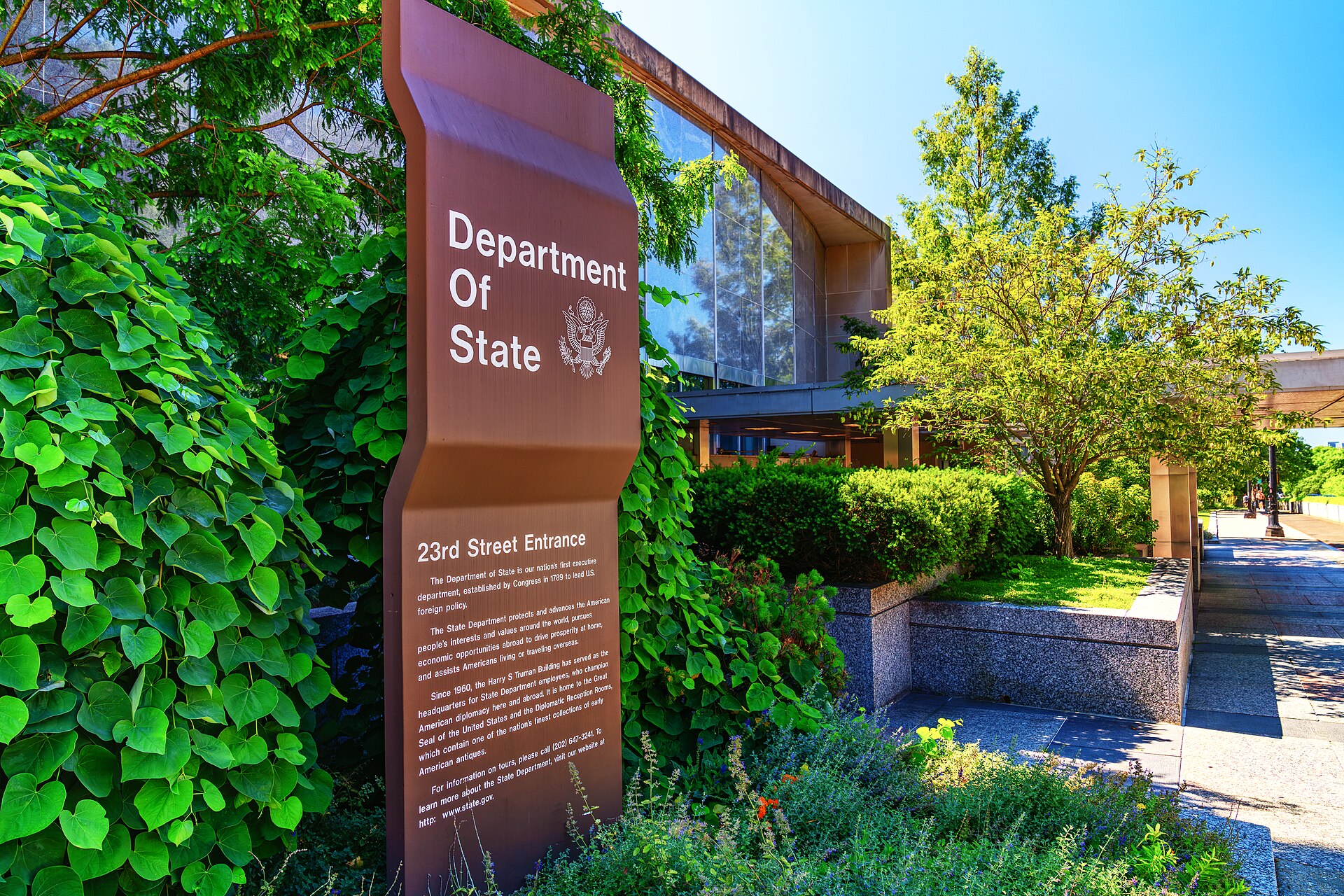
The Office to Monitor and Combat Trafficking in Persons leads the State Department's global anti-trafficking work through what it calls the "3P" approach — prosecution of traffickers, protection of victims and prevention of trafficking. In practice, that means analyzing governments' efforts worldwide, conducting bilateral and multilateral diplomacy, steering U.S. foreign assistance to anti-trafficking programs, coordinating anti-trafficking policy across federal agencies and working with civil society and the private sector, the department says. The office's most visible product is the annual TIP Report, which sorts countries into tiers based on their compliance with the standards of the Trafficking Victims Protection Act. A Tier 3 ranking can carry real consequences, including restrictions on some U.S. assistance, which is why foreign governments lobby hard over the report and why the ambassador who signs off on it holds genuine diplomatic leverage. The ambassador-at-large carries the rank of an assistant secretary and advises the secretary of state directly.
The debate over the pick
Thornhill's confirmation drew criticism that has followed her into the job. Writing in a human-trafficking policy analysis published as she took office, specialists argued that she arrives with no federal service and no substantial anti-trafficking background, a contrast with predecessors from both parties — including Trump's first-term ambassador, John Cotton Richmond, a former federal prosecutor who had spent his career on trafficking cases. The committee vote to advance her, 12–9, split largely along party lines. Her supporters make a different case: that the nomination ended a record vacancy in an office that cannot fully function without a confirmed head, and that her decades of business leadership and child-focused philanthropy — the basis the State Department itself cited in her earlier nomination — are a legitimate foundation for a diplomatic role that is as much about management and advocacy as about prosecution. Both arguments will now be tested against the same measure: the work itself, starting with the next TIP Report cycle.
What happens next
Thornhill's first tasks are institutional: a staff to lead, a report cycle to prepare, and a diplomatic calendar of countries whose trafficking records her office grades. Whether she addresses the viral first day directly is an open question; new ambassadors usually prefer to let the moment pass, and the State Department has treated the portrait as a routine official image throughout. What is certain is that the attention, however accidental, has given an office that usually works out of public view an unusually large audience on day one. For an ambassador whose job depends on making governments uncomfortable about trafficking, being widely known — even for the wrong reason — is not necessarily a disadvantage. The next test is whether the name recognition outlasts the photograph, and whether the office's delayed agenda moves at the speed its supporters promised and its critics doubt.