Tom Cruise Digger box office flop
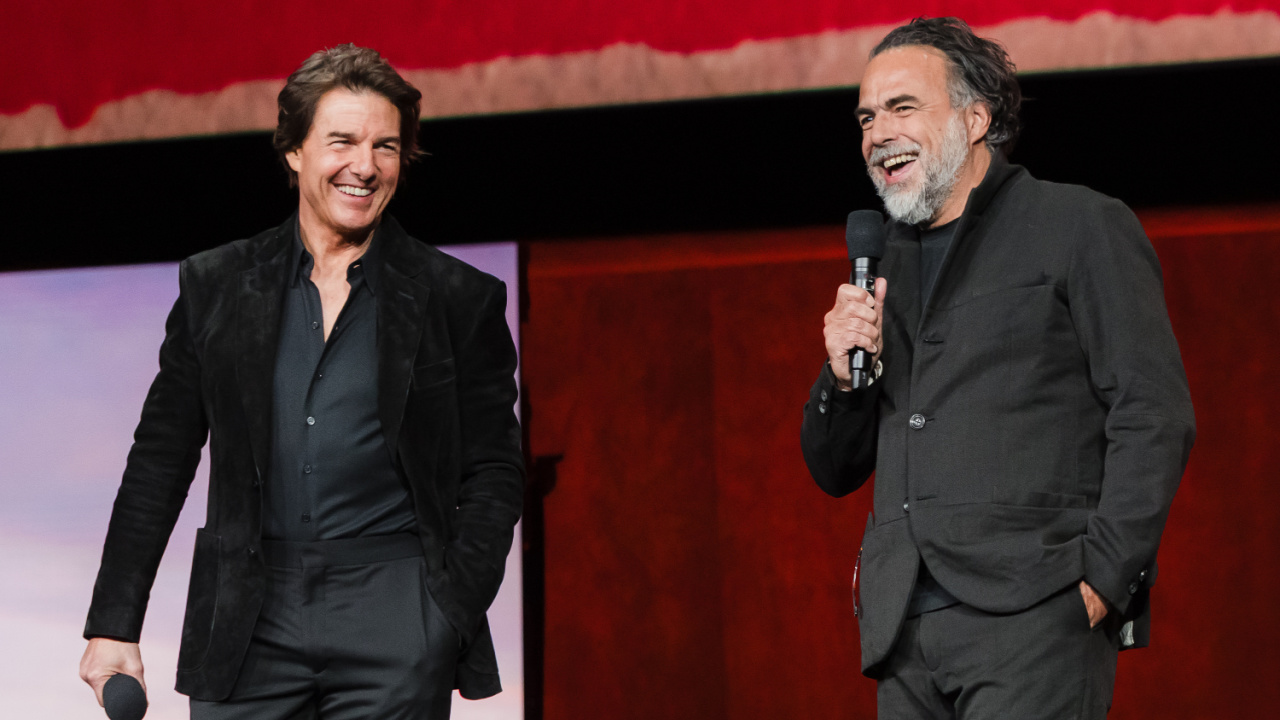
The Tom Cruise Digger box office flop is no longer a theoretical risk buried in tracking reports. Warner Bros.' disaster-movie satire earned an estimated $8 million in North America from October 2 through October 4, according to Rentrak estimates reported October 4, finishing fifth for the weekend. That is Cruise's worst opening since Lions for Lambs began with $6.7 million in 2007.
Worldwide, Digger opened to $20 million: $8 million domestic and $12 million overseas. It finished behind the weekend's No. 1 release, Verity, as well as Resident Evil, Heart of the Beast and Primetime. Even Warner Bros.' restrained pre-release forecast of $12 million to $15 million proved too optimistic. The opening did not merely underperform the film's reported cost; it missed the studio's already modest floor.
The initial figures were detailed by USA Today and Entertainment Weekly. The judgment that follows is analysis, not an audited studio ledger. But the direction is unmistakable: this is an opening that cannot support a production of Digger's scale through theatrical revenue alone.
The numbers, and what they actually mean
The budget is disputed; the gap is not
The Hollywood Reporter has put the production budget at $125 million. Variety and Entertainment Weekly have reported a wider range of $140 million to $180 million, attributing the increase in part to an extended shoot at Leavesden in the United Kingdom. Warner Bros. disputes those higher estimates. It is important to preserve that distinction: there is no single uncontested public production-cost figure.
Yet every version produces the same conclusion. An $8 million domestic opening is far too small for a movie carrying even the lowest reported budget. Insiders cited in coverage put all-in global costs at about $275 million, including roughly $100 million in worldwide marketing, against projected revenues near $127 million. On those estimates, the picture is tracking toward a loss of roughly $150 million. Mandatory summarized that projection; it remains an estimate dependent on eventual theatrical, premium-video, streaming and ancillary performance.
The simple comparison explains the scale. Verity, a Colleen Hoover adaptation starring Anne Hathaway, Dakota Johnson and Josh Hartnett, opened with $32.6 million domestic on a reported $40 million budget. It earned more than four times Digger's domestic take while costing a fraction as much to make. That does not automatically make Verity profitable, because marketing and exhibitor shares still matter. It does make its opening-day economics dramatically more forgiving.
Cruise's own history sharpens the contrast. The last sub-$10 million opening was Lions for Lambs at $6.7 million in 2007. Even The Mummy, widely treated as a failed franchise launch in 2017, started with $31 million. Digger is also Cruise's first non-action blockbuster since American Made in 2017, which makes the result a test not only of one title but of how much of his event-movie audience follows him outside the action lane.
Why week two cannot rescue the theatrical run
A second weekend can refine the severity, but it cannot reverse the underlying math. Even successful releases commonly fall 30% to 50% in week two. If Digger declined by only 30%, an unusually sturdy hold for a poorly received event film, its second domestic weekend would be about $5.6 million. A 50% fall would mean about $4 million. Neither trajectory creates a plausible path from an $8 million start to theatrical recovery on a nine-figure production.
That does not mean the movie will stop earning. International markets, premium video-on-demand, streaming licensing and later television windows can reduce the final loss. It means those channels would be salvaging value after the theatrical proposition failed, not transforming the opening into a hit. Consequence and PopCrush both emphasized how historically weak the debut is within Cruise's career.

Why this matters: a prestige bet built around two names
Digger was designed as an unusual collision of brands. Cruise arrived from the high-wire machinery of Mission: Impossible. Alejandro González Iñárritu brought the prestige of a director associated with ambitious, abrasive and formally controlled films. Their first collaboration cast Cruise as aging oil tycoon Digger Rockwell in a disaster satire about climate change and corruption.
That combination was meant to reposition Cruise after the long Mission: Impossible cycle: not away from spectacle, exactly, but toward a star-driven original that could operate as studio event, social satire and awards contender at once. Our earlier coverage traced the bet before release in reports on the world premiere and the Royal Film Performance premiere.
The collapse shows the limit of star power when a movie's promise is difficult to communicate. Cruise can make danger and physical commitment legible in a trailer: the plane is real, the jump is real, the mission is impossible. A climate-and-corruption satire centered on an aging oil magnate asks a different question. Is it a disaster film, a character study, an absurdist comedy or an indictment of the audience's own appetite for catastrophe? If the marketing cannot answer quickly, fame alone may not close the sale.
That is not an argument that audiences reject difficult films. It is an argument that expensive difficult films need a precise invitation. Satire can antagonize by design; it often asks viewers to recognize themselves in the target. But a blockbuster campaign still has to identify the pleasure on offer. The weak pre-release sentiment cited by coverage — RelishMix's measure slipping from 8.1 to 6.4 — suggests the message was losing clarity before tickets went on sale.
The Verity upset
Recognizable material, direct emotion, controlled cost
The weekend's clearest lesson is not simply that Cruise lost. It is that Verity won with a proposition audiences could identify immediately: a Colleen Hoover adaptation, a romance-and-suspense hook, three recognizable leads and a production budget reported at $40 million. Its $32.6 million opening gives the film room to absorb normal declines and still build a viable theatrical run.
That is what studios mean when they talk about risk-adjusted success. Verity did not need to behave like a $150 million tentpole because it was not financed like one. Its source material supplied a built-in audience; the genre supplied an emotional contract; the budget lowered the bar. Digger, by contrast, required a broad crowd to choose an original, tonally slippery satire during its first weekend. The movie's ambition may be greater, but ambition does not alter the arithmetic.
The continued appetite for franchise comfort makes the gap more revealing. Our report on the Avengers: Endgame Encore box office examined how a familiar Marvel title could return and pass Avatar. Reissues and established brands reduce the buyer's uncertainty. Digger asked people to pay before many of them knew what kind of experience they were buying.
The industry should resist turning that observation into a ban on originals. If every miss becomes evidence against originality, theaters will become even more dependent on aging franchises. The better lesson is narrower: originality does not exempt a film from positioning, and prestige does not compensate for an unclear audience promise.

The reviews split, but the audience signal was clearer
Digger entered Monday with a 51% Rotten Tomatoes score and a C+ CinemaScore. Those measures capture different things. Rotten Tomatoes aggregates critic recommendations; CinemaScore polls paying opening-night audiences. Neither is a perfect predictor, but a C+ for a wide studio release is especially troubling because the first audience is usually the most motivated and most inclined to like what it bought.
The critical divide was striking. The Evening Standard awarded the film five stars, while the New York Post called it Cruise's “first real stinker in nearly 10 years.” That spread helps explain why an early awards contender could arrive without a durable consensus. Some critics saw Iñárritu's maximalism and Cruise's self-reinvention as the point; others saw a movie whose tone and satire could not support its scale.
The trailer problem sits between those reactions. A campaign can survive divided critics if viewers understand the genre and want the ride. Here, confusion over whether Digger was comedy, catastrophe or prestige drama weakened that bridge. The opening therefore reflects more than reviews. It records a failure to convert curiosity into urgency.
Riz Ahmed is the bright spot in much of the response. He has drawn praise and remains a plausible subject of awards conversation even if the film itself recedes. Individual performances can survive a commercial failure because guilds and critics evaluate the work, not the opening-weekend multiple. Yet a weak run reduces the film's cultural presence, and awards campaigns depend partly on keeping voters engaged. Ahmed's prospects may now require Warner Bros. to mount a focused campaign rather than relying on the picture's momentum.
Who loses, who wins
Warner Bros. absorbs the immediate damage
The most direct loser is Warner Bros., coming off a milestone $4.3 billion global gross in 2025. That record made the studio's 2026 misses harder to dismiss as ordinary volatility. Entertainment Weekly placed Digger alongside a run that includes Practical Magic 2, The End of Oak Street and The Bride. One flop can be isolated. A cluster becomes a question about development choices, release strategy and cost discipline.
The management context adds pressure. Skydance co-CEO David Ellison reportedly declined to renew Warner Bros. Motion Picture chiefs Michael De Luca and Pamela Abdy. The timing encourages easy cause-and-effect stories, but the public facts do not establish that Digger alone determined that decision. What the opening does provide is another expensive data point in a slate already under scrutiny.
Cruise loses some leverage for original non-action projects, though not his status as a globally valuable star. His films have generated more than $14 billion across 53 titles. That library does not vanish because one new release failed. A theatrical opening also has secondary value: it advertises older films, refreshes licensing demand and keeps a star's catalog culturally active.
Paramount advanced that argument around Mission: Impossible – The Final Reckoning, saying theatrical visibility lifted the value of Cruise's library. It is a meaningful counterpoint, but not a blank check. Library uplift can soften the total economics; it cannot turn a projected $150 million loss into a theatrical success without evidence that the old titles generated comparable incremental value.
The winners are discipline and clarity
Verity's producers win the weekend because they paired known intellectual property with controlled cost. Exhibitors gain a strong No. 1 opener, though they would have preferred Digger to perform alongside it rather than beneath three holdovers. Ahmed may emerge with the most enhanced individual reputation if praise for his work persists independently of the film.
Iñárritu's long-term standing is unlikely to be decided by one weekend, but the commercial freedom attached to his next giant studio canvas may narrow. The creative win, if one exists, will come later: some box-office failures find devoted audiences after release. That possibility should not be confused with current evidence. On opening weekend, the audience was small and its grade was weak.
What happens next
VOD and streaming become a salvage operation
Warner Bros.' first practical decision is how long to protect the theatrical window. A quick premium-video release can capture curiosity while the film is still in the news, but it can also confirm to hesitant moviegoers that waiting was correct. A longer exclusive run preserves the principle of theatrical value while risking further loss of attention. The right choice depends on daily grosses and contractual terms that are not public.
Streaming offers a second chance to be understood. A film whose satire felt difficult to sell in a 30-second trailer may play better when subscribers encounter it at lower incremental cost. Completion rates, repeat viewing and catalog engagement could improve the revenue picture. They would not erase the opening or make undisclosed streaming economics equivalent to box-office receipts.
The awards campaign will probably become selective. Ahmed has the clearest path because praise can be concentrated around a performance even when the broader picture divides critics. Cruise and Iñárritu face a harder task: voters would need to embrace the very tonal gamble that general audiences declined. Warner Bros. must decide whether the campaign value justifies more spending on a film already expected to lose heavily.
Cruise's next move matters more than the postmortem
Cruise can respond in three ways. He can return quickly to a familiar action framework, restoring the audience contract that made his recent films events. He can pursue another original but at a cost scaled to the market's demonstrated appetite. Or he can continue chasing the prestige-event hybrid, betting that Digger was a marketing and execution failure rather than proof the category is impossible.
The second path is the most revealing. Nothing in the opening says Cruise cannot carry drama or satire. It says the market did not support this package at this price. A $40 million version of an adventurous star vehicle can survive a mixed reception that destroys a $140 million one. Budget is not merely an accounting choice; it determines how broad the audience must become before a movie is allowed to be considered successful.
The road from here: three scenarios
The best-case scenario is a modest theatrical hold, unusually strong premium-video demand and a streaming afterlife that turns Digger into a debated cult object. That would narrow the loss and preserve some awards attention, especially for Ahmed. It would still not make the opening good.
The middle scenario is more conventional: a 40% to 50% second-weekend decline, accelerated home release and a final loss close to current insider projections. In that outcome, the film becomes a cautionary case about marrying prestige ambition to blockbuster cost without a crisp commercial hook.
The worst-case scenario is a sharper collapse that extinguishes awards momentum and forces Warner Bros. to take the full reputational as well as financial hit. That could make studios more reluctant to finance original adult films at scale — an overcorrection that would punish the category rather than the choices specific to Digger.
The verdict after one weekend is therefore both clear and limited. Digger is a historic opening-weekend flop for Cruise, and the reported cost structure makes a theatrical recovery effectively impossible. What remains unsettled is how much can be recovered elsewhere, whether Ahmed can outlive the film in awards season, and whether Cruise interprets the result as a retreat signal or a demand for a smarter-sized risk.
The brutal number is $8 million. The more useful number may be $40 million — the budget of the film that beat it. Star power still matters, but in 2026 it is not a substitute for clarity, cost control or giving audiences a reason to buy now rather than wait.
Sources and methodology
This analysis separates opening-weekend estimates and reported cost figures from interpretation. Reporting consulted includes USA Today, Entertainment Weekly, Consequence, Mandatory, PopCrush and Gossip Herald. Rentrak's weekend estimates can be revised; studio budgets, marketing costs and downstream revenues are not independently audited in public.