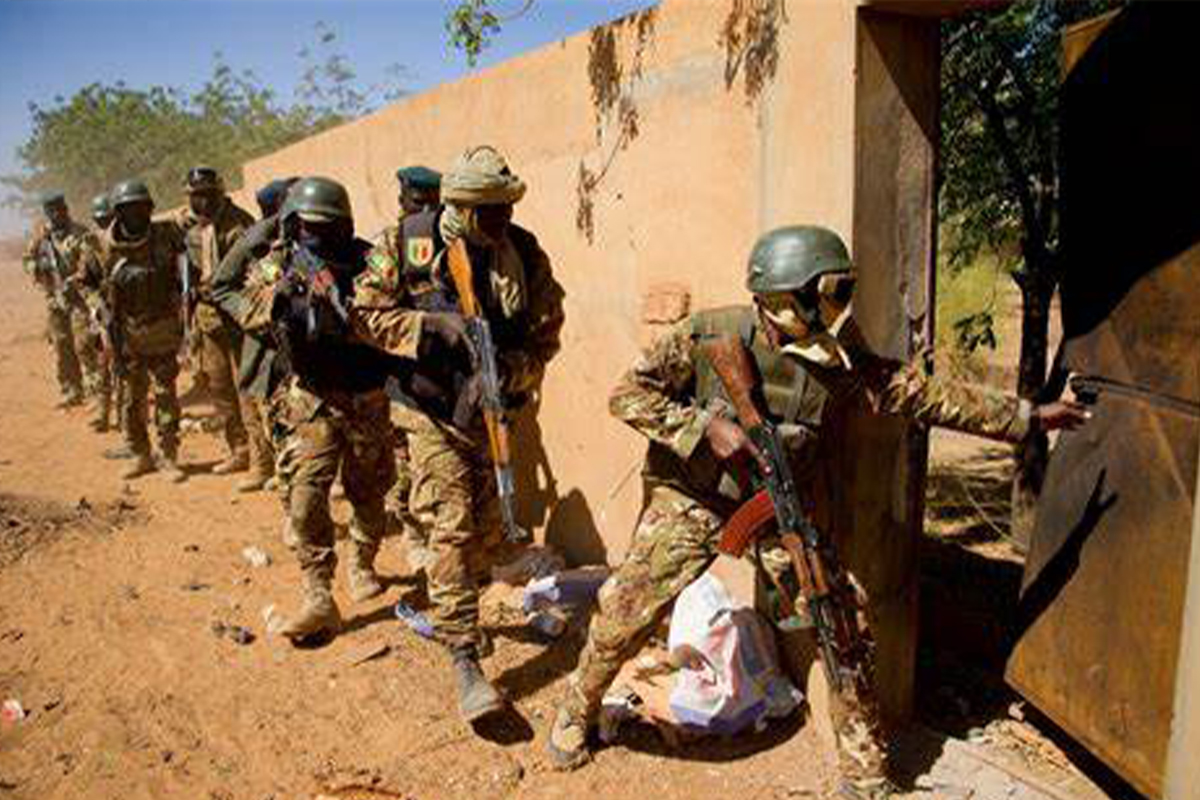
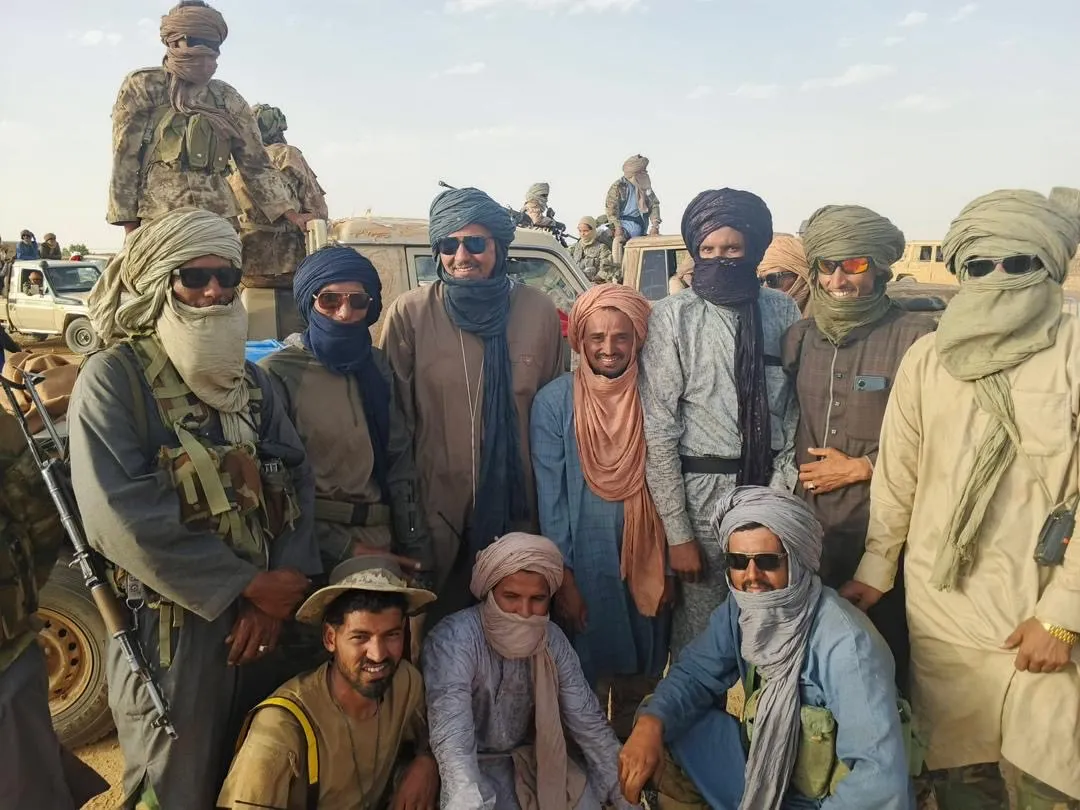
A Reuters report published Monday, September 21, says a security source estimated that 130 Malian soldiers were killed when Jama’at Nusrat al-Islam wal-Muslimin, the al-Qaeda-linked coalition known as JNIM, attacked the army camp at Dioura on September 10. A diplomatic source gave Reuters a slightly lower estimate of about 120 dead. If either figure is confirmed, Reuters reported, the assault would be the army’s heaviest single loss in 15 years.
The figure in this article’s headline comes from the security source cited by Reuters; it is not an official or independently verified count. Mali’s army has acknowledged that soldiers died, but it has not published a casualty list or total. JNIM claims that it killed 150 troops. The group has also issued hostage and equipment claims. Those are claims by a combatant organization with an interest in magnifying its success, and no independent evidence cited here verifies them.
Why this matters: Dioura is not only a dispute over whether the toll is 120, 130 or 150. It is a test of the security bargain used by Mali’s military rulers to justify their break with France and their partnership with Russian forces. The attack, the reported removal of captives and continuing pressure around Sévaré and Konna suggest that JNIM may be able to threaten several functions at once: fixed camps, road reinforcement, medical evacuation and the airport from which Malian and Russian forces rely on airpower.
The facts so far
The attack: JNIM fighters attacked the Malian army camp at Dioura, in the Tenenkou area of the central Mopti region, on Thursday, September 10. The occurrence of the attack and the fact of army losses are no longer seriously disputed. The final toll, the number captured and the material lost remain unsettled.
The deaths: Reuters cited a security source who said 130 soldiers were killed and more than 100 taken hostage. A diplomatic source put the dead at about 120. CGTN, republished by North Africa News on September 19, reported that the death toll had passed 100 according to sources. JNIM says 150 soldiers were killed. No named roll of the dead, hospital accounting, burial record or independent site investigation has been made public in the reporting used here.
The army statement: Mali’s army said on Saturday, September 19 that soldiers had died at Dioura and that a retaliatory operation lasting more than a week inflicted significant losses on the attackers. The army did not provide a figure for its own dead, missing or captured, and it did not quantify the losses it said it imposed on JNIM. The acknowledgment confirms fatalities; it does not resolve their scale.
The combatant claims: JNIM has claimed that it killed 150 soldiers, captured dozens of personnel and seized or destroyed vehicles, motorcycles, weapons and ammunition. A separate JNIM statement, relayed by Demócrata, claimed attacks involving the Malian army and Russia’s Africa Corps. The casualty, hostage and equipment figures are unverified propaganda claims and are presented here only with attribution.
The neighboring front: JNIM separately claimed that it struck air-defense systems at Sévaré airport and killed 33 pro-government personnel in Sévaré and Konna. Those claims have not been independently verified. Residents told Reuters of continued shelling and pressure around Konna, but eyewitness accounts cannot by themselves establish the full disposition or identity of armed units.
Six nights at Sévaré
Sévaré airport matters because it hosts Malian military aircraft and drones and supports operations alongside Russia’s Africa Corps. A resident told Reuters that shelling continued for six consecutive nights through September 21. The resident said approximately 40 wounded Malian and Russian fighters were visible at Sévaré hospital and that Russian soldiers were no longer visible in the town that day.
That is one resident’s account, not a government deployment record or an independently audited hospital count. Russian personnel could have moved, reduced their public profile or simply been outside the witness’s view. The estimate of 40 wounded should therefore be read as eyewitness reporting, not a confirmed casualty figure.
Even with that caution, repeated shelling around an airport changes the military problem. Aircraft and drones matter only if runways, fuel, maintenance, air defenses and crews remain usable. A base under pressure must divert personnel to perimeter defense and force protection. Konna, about 55 kilometers away, adds another demand on the same reinforcement network after residents told Reuters that fighters on motorcycles appeared to surround the camp.
The junta’s security bargain
Mali’s military rulers came to power through coups in August 2020 and May 2021. Colonel Assimi Goïta emerged as the dominant leader. The junta framed its project around sovereignty: end dependence on former colonial power France, replace an unpopular international security architecture and give the Malian armed forces greater freedom to prosecute the war.
French forces completed their withdrawal from Mali in 2022. Russian support grew first through Wagner Group personnel and later through Africa Corps, the more directly state-linked formation that absorbed parts of Moscow’s African military presence. Supporters argue that the shift returned operational choices to Bamako and supplied a partner willing to fight without the political conditions imposed by Western governments.
Critics answer that the change replaced one foreign dependency with another while weakening public accountability. Dioura does not by itself settle that argument. Earlier French and United Nations deployments did not end Mali’s insurgency, and one battle cannot measure an entire campaign. But a loss on the scale described by Reuters undercuts the strongest version of the junta’s promise: that centralized military rule plus Russian assistance would reliably deliver control.
From the 2012 war to the April offensive
The current conflict grew from the 2012 rebellion and jihadist takeover of northern territory, followed by French intervention and a long international counterinsurgency. Armed groups subsequently spread into central Mali and across the Sahel. JNIM, formed in 2017 as an umbrella of al-Qaeda-aligned factions, has developed a strategy that combines attacks on military positions with pressure on roads, rural administration and communities.
Political instability and military change have not broken that trajectory. The 2020 and 2021 coups concentrated authority in the armed forces. The departure of French and United Nations missions reduced international constraints but also removed intelligence, aviation and logistics capacity. Russian personnel supplied some replacement capability, yet the geography still favors mobile groups able to choose isolated targets.
The pressure intensified in 2026. Reports cited in Reuters’ broader coverage described coordinated attacks in April that reached Mali’s main airport and killed Defence Minister Sadio Camara, followed by later operations against army positions. Those claims and casualty details require the same attribution discipline as the Dioura figures. Their strategic value lies in the pattern they suggest: armed opponents have been testing both remote garrisons and symbols of central state power.
What the numbers mean
The gap between the reported figures is meaningful but narrower than the gap between any of them and the absence of an official total. Reuters’ two sources differ by about 10 deaths: roughly 120 versus 130. JNIM’s claim of 150 is 20 above the security source and 30 above the diplomatic source. All three totals would put the loss above 100; none is independently verified.
A previous benchmark helps explain the shock. Background accounts identify a 2019 attack at Indelimane in which 53 soldiers and one civilian were killed. A confirmed toll of 120 would be more than twice that military loss; 130 would be roughly two and a half times as large. Those comparisons show scale without proving a final ranking, because records are incomplete and the present toll remains disputed.
The hostage figures are strategically different from deaths. Captives can provide JNIM with intelligence, bargaining leverage and propaganda material; they also prolong uncertainty for families. Claims that vehicles or motorcycles were seized matter if captured transport allows the group to disperse or attack again. Yet counting equipment from communiqués is especially vulnerable to duplication and exaggeration. Photographs, serial numbers or an independent inventory would be needed to verify the claims.
Who gains, who loses and what critics argue
JNIM gains narrative and operational leverage if it can keep the government from publishing a credible account. The group can advertise the highest toll, present prisoners as proof and portray repeated shelling as evidence that it controls the tempo. That propaganda advantage exists even if some of its figures are false.
The junta loses political credibility when it acknowledges deaths but leaves families and the public to choose among anonymous-source and militant figures. Operational secrecy can be justified during an active counterattack; prolonged silence about dead or missing personnel has a separate cost. It allows opponents to define the event and makes outside estimates the de facto public record.
Russia’s Africa Corps faces a test of capability and exposure. If Russian personnel were among the wounded described in Sévaré, the partnership is bearing direct costs. If air defenses or aviation operations were disrupted, the force’s value as a multiplier becomes harder to demonstrate. Neither conclusion can be treated as established without official or independent evidence.
Critics of the Russia strategy will argue that the model has not reversed JNIM’s expansion and may encourage reprisals that alienate communities. Supporters will argue that the army is fighting a difficult, mobile enemy; that Western-backed arrangements also suffered grave losses; and that the counter-operation may yet restore the corridor. Both positions should be tested against observable outcomes: access to Dioura, the condition of Sévaré airport, the status of captives and the frequency of subsequent attacks.
Civilians and military families carry the clearest losses. Families need names, not ranges. Residents around Sévaré and Konna face shelling, road insecurity and the risk of displacement. Communities can also be pressured by both armed groups and security forces for transport, intelligence or allegiance. Retaliation that fails to distinguish fighters from civilians would risk deepening recruitment and mistrust; militant coercion produces the same corrosive effect.
What happens next
- Retaliation and verification. The army says it has already conducted a counter-operation. The next test is whether it can publish evidence of restored access, recovered equipment or militant losses without presenting unverified battlefield claims as fact. Civilian-harm allegations will require independent scrutiny.
- The battle for Sévaré. Continued shelling or damage to air defenses, runways, fuel or maintenance facilities would threaten the government’s ability to reinforce central Mali. A secure airport and resumed operations would limit JNIM’s strategic gain even if Dioura remains a severe loss.
- The fate of captives. Proof of life, releases, exchanges or negotiations could determine whether the hostage issue becomes a prolonged political crisis. JNIM’s numbers should not be accepted without corroboration, but the army also needs to account for missing personnel.
- Political aftershocks in Bamako. A confirmed three-digit toll would sharpen questions inside the armed forces and among supporters who accepted restricted civilian politics in exchange for security. The response could be greater transparency, tighter information control or a command shake-up; none should be assumed before it occurs.
- Regional spillover. JNIM operates across a Sahelian theater in which borders are porous and armies are stretched. Success in central Mali could influence recruitment and tactical choices elsewhere, while a forceful government response could push fighters toward neighboring areas. The direction depends on subsequent evidence, not on one communiqué.
The immediate conclusion remains deliberately narrow. JNIM attacked Dioura and Mali’s army has acknowledged deaths. Reuters sources put the toll at about 120 and 130, while JNIM claims 150. Shelling around Sévaré has continued and one resident described roughly 40 wounded Malian and Russian fighters. The confirmed facts show a serious military setback; the precise casualty count, hostage total, equipment losses and lasting control of the corridor remain unresolved.
Sources and reporting notes
- Reuters, September 21: confidential-source estimates, army statement, Sévaré and Konna eyewitness accounts, and JNIM claims
- CGTN via North Africa News, September 19: early reporting that the toll had passed 100
- Demócrata: JNIM’s claim of attacks involving the Malian army and Russia’s Africa Corps
- Wikipedia: consolidated background and chronology for the 2026 Dioura attack
- Sahel Tribune: Malian army file-photo source
- Small Wars Journal: insurgency context-photo source
Reporting cutoff: September 21, 2026 at 5:37 PM PDT. The Reuters-source estimates, eyewitness observations, army statements and JNIM claims are distinguished throughout. This is a fixed reporting snapshot and does not update automatically.