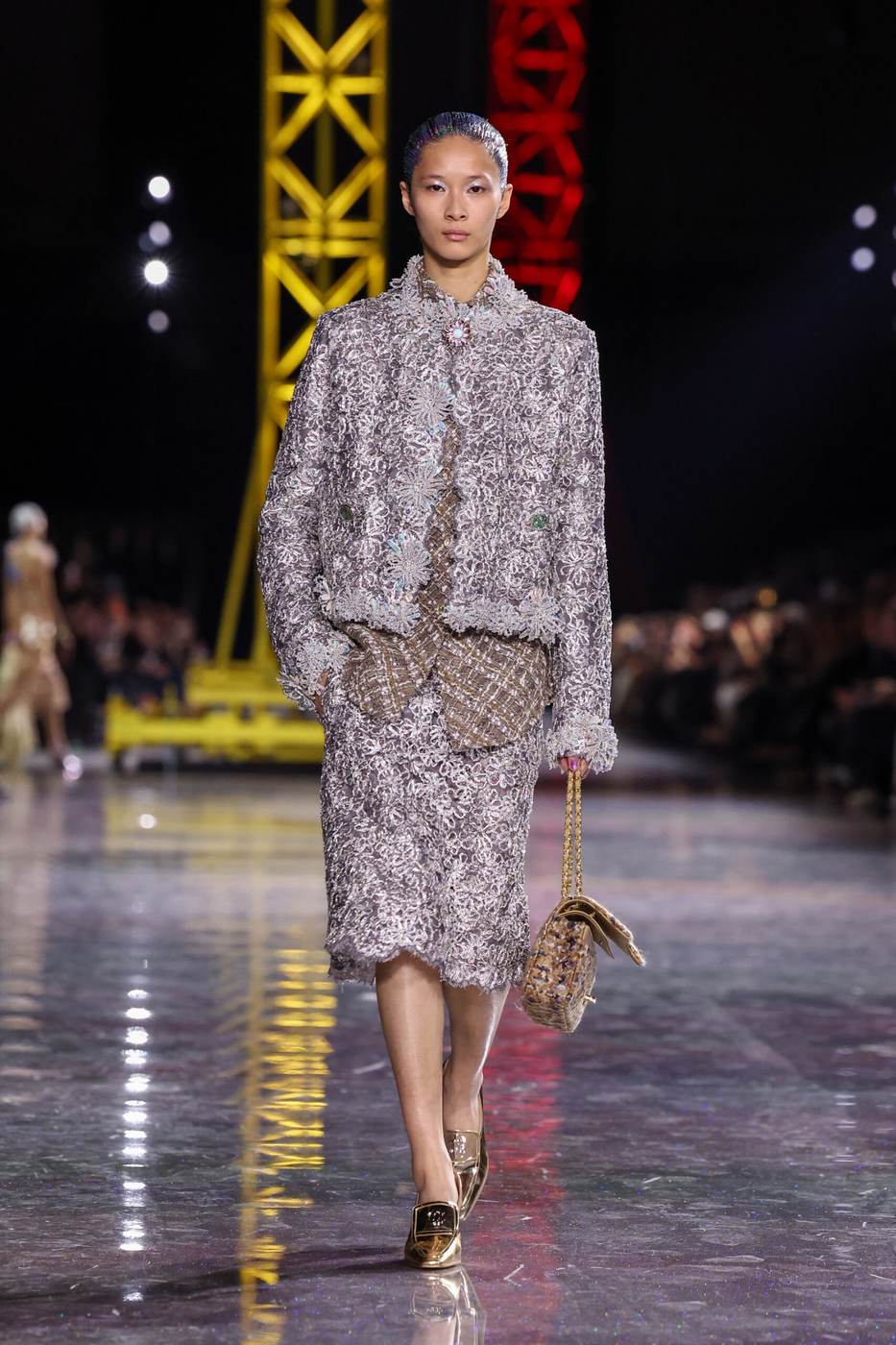
At Los Angeles’s Peacock Theater on September 14, Zendaya’s custom Prada gown used sheer grey tulle, crystal embellishment and a short train, while a new pixie cut shifted the overall proportion. Nicole Kidman’s white Chanel bustier dress, designed under Mathieu Blazy, carried 46 flowers built from silk crepe, organza and raffia. Colman Domingo’s Valentino look moved in another direction: an orange mandarin-collar jacket, coral shirt, white trousers and a fuchsia sash.
Those three outfits matter together because they resist a single trend forecast. One relies on transparency and light, one on hand-built surface, and one on saturated tailoring. Their common ground is precision. Each look has an intentional focal point and enough restraint around it to make the craft legible.
Reference without costume
Host Mariska Hargitay’s crimson sequined Monse gown referred to her mother Jayne Mansfield’s appearance in the 1956 film The Girl Can’t Help It. A reference works when it adds meaning rather than replacing the wearer. The gown echoed old Hollywood, but the modern cut and Hargitay’s role as host kept it in the present.
Other notable choices broadened the field: Selena Gomez in chainmail Louis Vuitton, Elle Fanning in iridescent sage Ralph Lauren, Ayo Edebiri in blue Chanel with a vermillion bow, and Keri Russell in floor-length leather by Khaite. Menswear also rewarded texture and proportion rather than novelty for its own sake.
The practical lesson
Red-carpet fashion is not a retail instruction. Its most useful ideas are hierarchy and editing. One strong surface needs quieter accessories. An unusual color becomes easier when the silhouette is familiar. A personal reference lands when the garment still works from across a room. That is why the memorable looks felt authored rather than merely expensive.
Why this matters
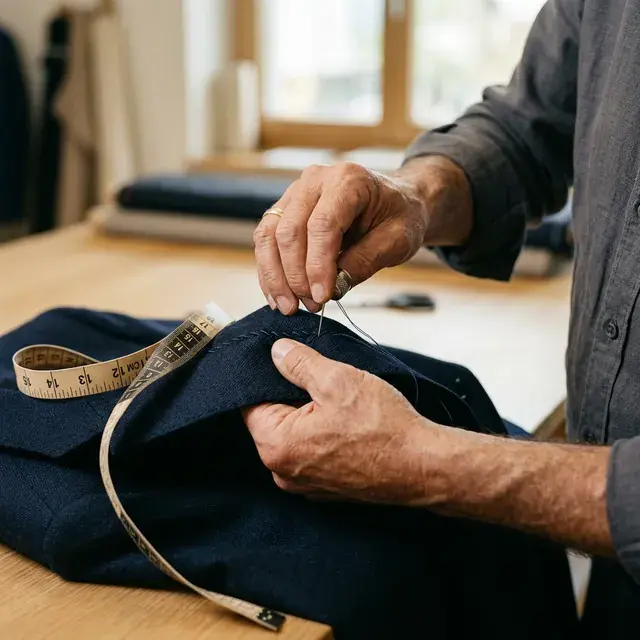
Red-carpet dressing is one of fashion’s most efficient distribution systems: a single image can translate atelier labor into global brand recognition within minutes. When the most discussed looks depend on construction rather than logo placement, craft becomes the advertisement. That raises the cultural value of the people who embroider, fit and engineer the garment—not only the celebrity wearing it.
How we got here
Awards fashion has moved through waves of stylist-driven uniformity, archival quotation and viral stunt dressing. The 2026 carpet suggests a correction: specificity is replacing the search for one dominant silhouette. That resembles older Hollywood image-making, when dress, hair and persona were designed as one composition, but today the image is judged instantly and from every angle.
Winners, losers and the skeptical case
Couture workrooms, stylists with research depth and houses able to produce custom pieces benefit from this emphasis. Smaller designers can gain attention through a singular idea, yet they compete against conglomerates with far greater celebrity access. Critics may see the carpet as luxury advertising—and it is—but the useful distinction is whether the collaboration reveals a point of view or merely turns a person into a billboard.
What the details imply
The contrast among transparent tulle, 46 hand-built flowers and saturated tailoring matters more than a best-dressed ranking. Three materially different solutions reached the same result: a clear focal point supported by disciplined editing. That pattern suggests memorability is coming from hierarchy, not maximal expense; the number of decorative elements matters less than whether the eye knows where to land.
What happens next
Expect houses to push behind-the-scenes craft stories harder because process extends the life of a carpet image. The optimistic scenario gives ateliers and makers more visible credit; the cynical one turns labor into content while keeping the worker invisible. The looks that endure will connect technique to personality, because construction without character is only a product demonstration.
Sources: Look descriptions and designer credits were checked against InStyle, Page Six, CNN and W Magazine.