The Cardinals vs Rams score finished 18-16 to Arizona at SoFi Stadium in Inglewood, California, on Sunday, October 18, 2026, in Week 6 — and the Cardinals won without scoring a single touchdown. Chad Ryland kicked all six of his field-goal attempts, the last of them a 43-yarder as time expired, after Matthew Stafford had given Los Angeles a 16-15 lead with 47 seconds left. Arizona snapped a four-game losing streak and an eight-game NFC West losing streak; both teams are now 2-4, with the Rams last in the division on the tiebreaker.
Six field goals, zero touchdowns, a punter kicking the go-ahead extra point with 47 seconds left — and a walk-off winner in the Rams' own building
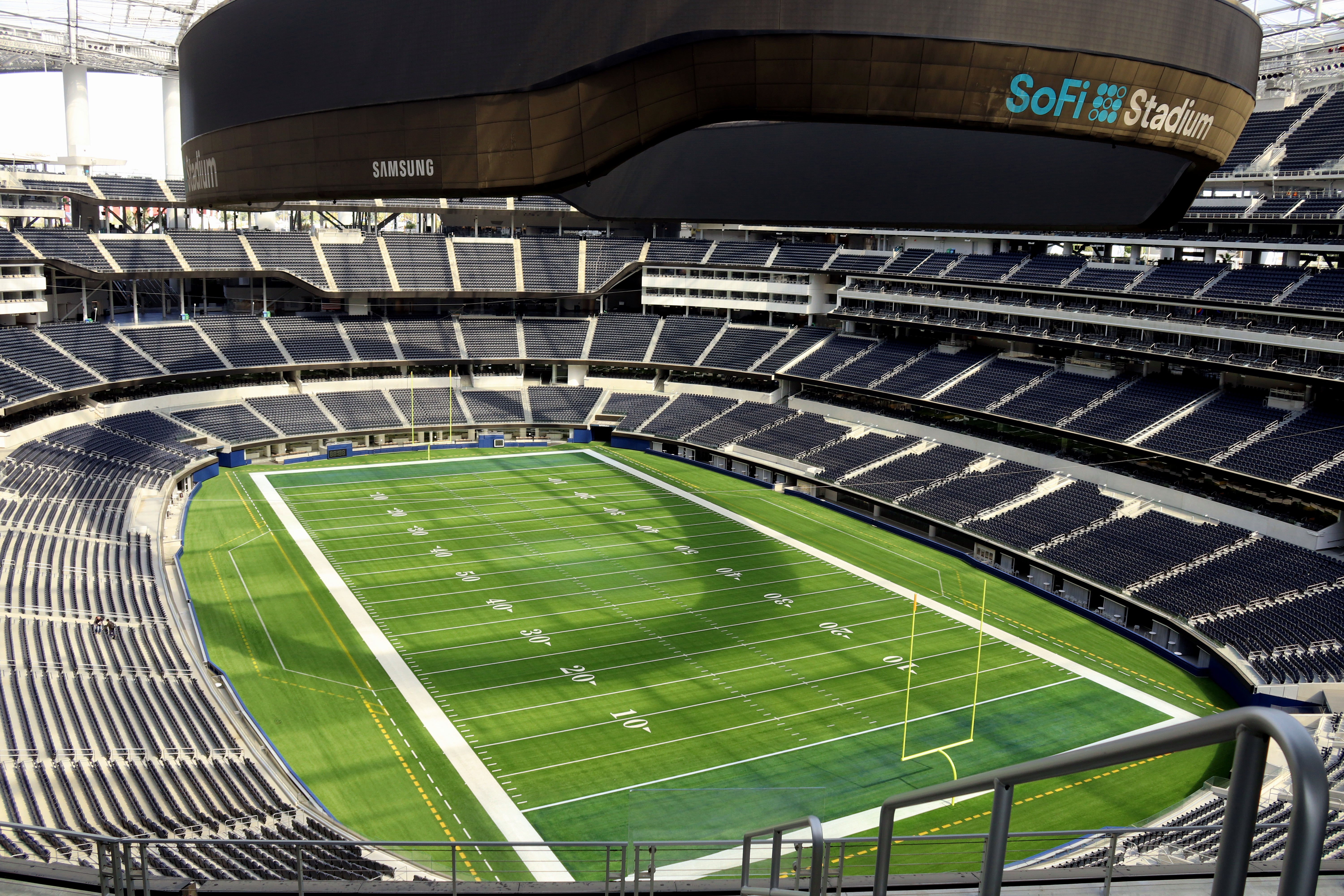
INGLEWOOD, Calif. — Some road wins tell you more about the loser than the winner, and this was one of them. Arizona did not produce a single touchdown all afternoon. Its quarterback threw for 218 yards and an interception. Its scoring drives kept stalling in exactly the territory where drives are supposed to become touchdowns. And yet the Cardinals walked out of SoFi Stadium with an 18-16 win, because the team that was supposed to be outclassed controlled everything except the highlight reel: the clock, the field position, the defensive matchups, and — six times out of six — the kicks.
A field-goal duel the favourites never escaped
The first half set the pattern and then refused to break it. The teams traded field goals in the first quarter for 3-3, and the second quarter followed the same arithmetic with one exception: the game's first touchdown, a 15-yard reception by Rams running back Blake Corum, was answered not with a touchdown but with more Arizona field goals, and the teams reached half-time level at 9-9. The quarter-by-quarter line — Arizona 3, 6, 3, 6; Los Angeles 3, 6, 0, 7 — reads like a kicking contest, and for long stretches it was one, but the more telling number was the Rams' yardage. Los Angeles managed barely 100 yards in the first half — 107, by Rams Wire's count — with three three-and-outs, against a defence that had spent the season as a cautionary tale.
That context deserves underlining, because it is what turns a narrow win into a startling one. Arizona entered Sunday ranked No. 26 in the league in yards allowed and No. 32 — dead last — in points allowed, and it had conceded more than 30 points in every defeat of its four-game losing streak. The Rams, favoured by nearly two touchdowns, spent the first half looking like a team waiting for a game to start that had already begun without them.
The afternoon's strangest subplot began in that first quarter, and it shaped the finish. Rams kicker Blake Grupe suffered a knee injury making a tackle on a kickoff, an occupational hazard that kickers are neither trained nor built for, and Los Angeles played the rest of the game without a specialist kicker. For most of the afternoon the absence was a footnote. By the final minute it was the story inside the story: the Rams' season, for one play, would rest on their punter's right leg.

Stalled drives, a fumble, and a defence that would not break
The third quarter produced a single score — another Ryland field goal, for 12-9 — and the fourth began with Arizona edging to 15-9, a two-field-goal lead built entirely without the end zone. The method was not subtle. Arizona held the ball for 34 minutes and 52 seconds to Los Angeles' 25:08, a near-ten-minute advantage assembled from Jacoby Brissett's high-percentage passing and Bam Knight's grinding on the ground: Knight carried 15 times for 80 yards, the kind of unspectacular, clock-eating production that keeps a favoured opponent's offence standing on the sideline in a helmet. Brissett's favourite target was tight end Trey McBride, who caught seven passes for 53 yards — short, reliable, drive-sustaining completions that moved chains without ever quite threatening the end zone.
That is the honest tension at the centre of Arizona's win, and it should not be smoothed away. Six trips producing six field goals is simultaneously a triumph of consistency and an indictment of finishing: against a better opponent, or on a day when Ryland was merely very good instead of perfect, 18 points without a touchdown loses. The Cardinals' defence, meanwhile, produced the fourth quarter's decisive non-scoring play: with Los Angeles driving and the score 15-9 in the final eight minutes, tight end Tyler Higbee fumbled and Denzel Burke recovered for Arizona, at 7:10 of the fourth quarter by the game reports. A Rams team that had finally found momentum handed it back, and the clock — Arizona's best player all day — kept running.
Forty-seven seconds of chaos: a punter's extra point, then Ryland at the death
And then, finally, the Rams remembered who they were supposed to be. Pinned at their worst field position of the entire day, Los Angeles drove 86 yards in eight plays in 2:01 — more urgency and precision in two minutes than in the previous three hours. The drive's explosive play was vintage Stafford: a 42-yard strike to Puka Nacua, who finished with six catches for 80 yards, that flipped the field and the mood of the stadium in one throw. With 47 seconds left, Stafford found Colby Parkinson for a 6-yard touchdown, tying the game at 15-15. The season's strangest kicking situation then produced its most improbable point: with Grupe injured, punter Ethan Evans stepped up and kicked the extra point, and the Rams led 16-15.
It should have been enough — a famous escape of the kind favourites collect in October. But 47 seconds, it turns out, was too much time to leave a team that needed only a field goal, especially one whose kicker had not missed all day. Brissett opened the response with a 21-yard completion to Jalen Brooks over the middle, and a 15-yard unnecessary-roughness penalty on Josh Wallace moved Arizona decisively into Ryland's range. A few plays later, with the clock reaching zero, Ryland struck his sixth field goal of the game — from 43 yards — and the Cardinals had won a game in which they never scored a touchdown, on the road, against a team favoured by nearly two touchdowns. Stafford's final line — 25-of-33 for 222 yards and two touchdowns — was the better quarterbacking line of the day. It bought his team exactly 47 seconds in the lead.
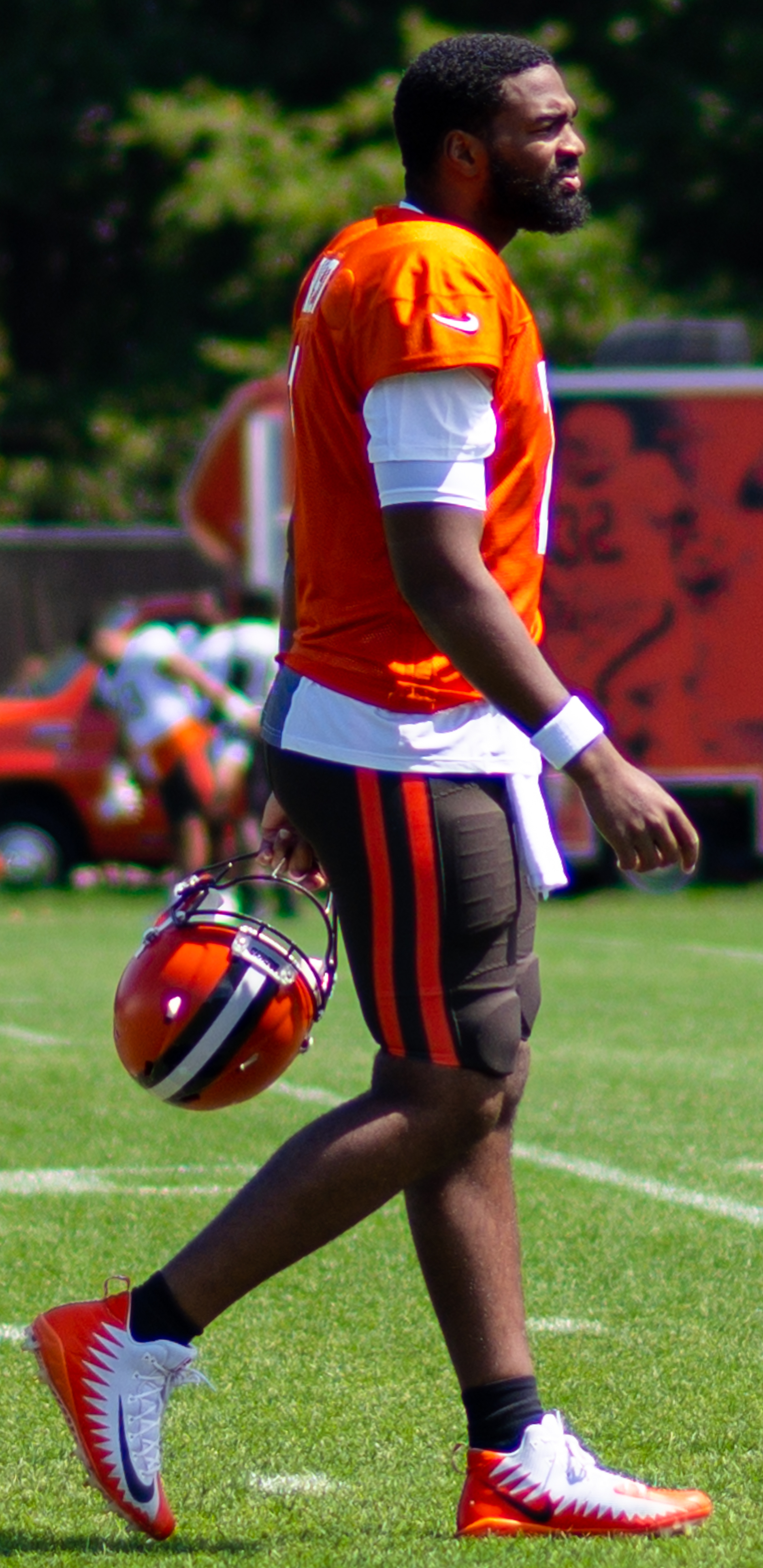
The numbers behind the Cardinals Rams score
Start with the strangest line in the box score: 18 points, zero touchdowns. Every Arizona point came from Ryland's right foot — six field goals on six attempts, capped by the 43-yard winner — in a league where settling for three is supposed to be how underdogs lose politely. It worked here because of everything around it. Arizona won time of possession by almost ten minutes (34:52 to 25:08), which is another way of saying the Rams' offence spent the afternoon as a spectator at its own home game. Los Angeles barely cleared 100 first-half yards and went three-and-out three times before half-time; a team built around Stafford's arm and Sean McVay's sequencing was reduced to one touchdown drive of any rhythm — the last one — plus Corum's second-quarter score.
Compare the quarterbacks honestly and the game makes even less conventional sense. Stafford was the more efficient passer: 25-of-33, 222 yards, two touchdowns, no interceptions mentioned in any report, and the game's single biggest completion, the 42-yarder to Nacua. Brissett finished 24-of-35 for 218 yards with one interception, and his offence never finished a drive. What Brissett had, and Stafford did not, was a supporting structure: Knight's 80 rushing yards on 15 carries kept Arizona on schedule, McBride's seven catches kept it moving, and its defence — last in the league in points allowed entering the day — held a nearly two-touchdown favourite to nine points through three and a half quarters. The receiving lines tell the same story from the other side: beyond Nacua's six catches for 80 yards, Davante Adams managed three catches for 39 yards and hopped off the field late in the fourth quarter with an apparent leg injury — an image that may matter to the Rams' season long after the details of this loss fade.
Then there is the historical ledger, which is where this result moves from odd to significant. Arizona arrived 3-16 against the Rams since McVay became Los Angeles' head coach, on an eight-game losing streak within the NFC West and a four-game losing streak overall, in which its defence had allowed more than 30 points every time. All three streaks ended in one afternoon, in the Rams' stadium. And the venue itself supplies the day's neatest statistic, noted by NBC Sports: Arizona has now won twice at SoFi Stadium this season — against the Chargers in Week 1 and now against the Rams — which is more wins in that building than the Rams and Chargers, the two teams who actually live there, have managed between them (one). Both teams sit at 2-4, and because Arizona now owns the head-to-head win, it is Los Angeles — the preseason favourite, the home team, the team favoured by nearly two touchdowns on Sunday — that wakes up last in the NFC West on the tiebreaker, having lost back-to-back games.
Why this matters
October divisional games between two 2-4 teams are usually filed under desperation, but this one rearranges the NFC West's psychology. For Arizona, the value is not really the win itself — at 2-4, the Cardinals remain a long way from anywhere — it is the template. A team with the league's worst scoring defence cannot expect to win shootouts, and on Sunday it did not try to: it shortened the game, protected its quarterback with short throws and a functional run game, trusted its kicker completely, and asked its defence for three good quarters rather than a miracle. That is a repeatable way for a flawed roster to steal divisional games, and flawed rosters that find a repeatable way to steal games stop being pushovers. The eight-game divisional losing streak was not just a number; it was evidence that Arizona could not beat the teams it sees twice a year. That evidence now has an exception, and exceptions are where turnarounds start.
For Los Angeles, the meaning is darker, because this loss is a pattern confirming itself rather than an accident interrupting one. The Rams have lost back-to-back games — last week in overtime at home, this week at the death at home — and a team with championship habits is not supposed to be collecting walk-off defeats in its own building. The specifics are worse than the summary: an offence with Stafford, Nacua and Adams produced barely 100 yards in a half against the league's 32nd-ranked scoring defence, and the one drive that finally looked like the Rams — 86 yards, eight plays, a punter converting the go-ahead point — lasted exactly as long as it took Arizona to answer. Contenders lose games; they do not usually lose the same game three different ways in one afternoon. At 2-4 and last in the division, the Rams' margin for the rest of the season has effectively vanished: every subsequent loss now compounds, and the tiebreaker they surrendered on Sunday is the kind that gets remembered in December.
Who benefits, who loses — and what the critics will say
The clearest beneficiary is Ryland, whose perfect afternoon did the one thing a kicker on a struggling team most needs: it made him the reason for a win rather than a footnote in a loss. Six-for-six, on the road, with the last one struck as time expired to beat a divisional rival, is the kind of game that changes how a coaching staff manages fourth downs for the rest of a season — Arizona can now play for field-goal range in late-game situations with genuine confidence rather than hope. Brissett benefits in a quieter way: 218 yards and no touchdowns will not lead any highlight show, but leading a 47-second, season-shifting response drive — one completion, total composure, ball in range — is precisely the job description of a veteran quarterback on a young team. Arizona's defence, collectively, gains the most valuable thing it has lacked all season: proof. A unit ranked last in points allowed that stifles Stafford for three quarters has something real to build a week of practice on.
The losers start with the Rams' offence as a whole, and within it, with the circumstances around Adams, whose late exit with an apparent leg injury threatens the one part of this team that cannot afford subtraction. The Rams' special teams lose too: Grupe's injury was bad luck, but a season can turn on bad luck at kicker, and Evans — who performed his emergency duty flawlessly, converting the go-ahead extra point — cannot be the long-term answer at two jobs. The critics of Los Angeles will say, with the first-half yardage as their exhibit, that a team favoured by nearly two touchdowns at home has no business needing a miracle drive to lead a 2-4 opponent for 47 seconds, and that McVay's Rams were out-coached in the game's long middle: out-possessed, out-disciplined, and finally out-kicked. The critics of Arizona will answer, fairly, that a team which cannot score a touchdown has not solved its biggest problem, merely survived it — that Ryland's perfection is a wonderful afternoon and a fragile foundation, and that six field goals against Denver next week is a plan that requires the defence to repeat the best performance of its season. Both critiques are honest, which is why this game is worth more than its standings impact: it was a genuine upset with genuine flaws on the winning side, and both teams now have to decide which version of Sunday was the real one.
What happens next
The schedule offers neither team a soft landing. Arizona returns home to host the Denver Broncos in Week 7, carrying something it has not carried in over a month: momentum, and a defensive performance it will spend the week trying to prove was not a mirage. The questions follow it home — whether the offence can finally turn Ryland's field-goal drives into touchdowns, and whether a defence that had allowed more than 30 points in every loss of the skid can hold a second consecutive opponent in check. Win that one, improbably, and the Cardinals are 3-4 with a divisional road win in the bank, and the first half of their season reads as a slow start rather than a collapse. The Rams travel to Las Vegas to face the Raiders, in a game that has quietly become close to must-win: a third straight defeat would drop Los Angeles to 2-5, deepen its hold on last place in the NFC West, and turn every remaining week into arithmetic. The Rams' week will be dominated by two medical reports — Grupe's knee and Adams' leg. The rematch between these two will come later in the season, and it will be measured against this afternoon: the day the league's worst defence walked into SoFi Stadium, never scored a touchdown, and left with the win anyway.
More NFL coverage: Bills beat Rams 37-34 in overtime on Monday Night Football · Matthew Stafford's record pick-six night against the Broncos · Jaguars demolish Patriots 35-6 as Travis Hunter snags first NFL interception
Sources
NBC Sports, Pro Football Talk, match report (October 18, 2026) — final score 18-16 at SoFi Stadium, Ryland 6-for-6 including the 43-yard winner as time expired, Stafford's 6-yard touchdown to Parkinson with 47 seconds left and Evans' extra point with Grupe injured, Brissett's 21-yard completion to Brooks plus the 15-yard unnecessary-roughness penalty on the winning drive, Brissett 24-of-35 for 218 yards with an interception, McBride's seven catches for 53 yards, Stafford 25-of-33 for 222 yards and two touchdowns, Nacua's six catches for 80 yards, Adams' three catches for 39 yards and his late apparent leg injury, Arizona's No. 26 yards-allowed and No. 32 points-allowed rankings, the Rams' three first-half three-and-outs, time of possession 34:52 to 25:08, and Arizona's two wins at SoFi this season. theScore, match report (October 18, 2026) — Arizona winning without a touchdown, the 43-yard walk-off field goal, Stafford's go-ahead score with 47 seconds left, and both teams at 2-4 with the Rams last in the NFC West on the tiebreaker and losers of back-to-back games. AZCentral, live match coverage (October 18, 2026) — Ryland's perfect 6-for-6 day, Knight's 15 carries for 80 yards, McBride's seven catches for 53 yards, the Rams' 86-yard, eight-play, 2:01 go-ahead drive from their worst field position of the day, the Higbee fumble recovered by Denzel Burke with the score 15-9 at 7:10 of the fourth quarter, and Evans' go-ahead extra point after Grupe's first-quarter knee injury. Cards Wire (USA Today), live match coverage (October 18, 2026) — the four-game losing streak and eight-game NFC West losing streak snapped, Arizona's 3-16 record against the Rams since Sean McVay became head coach, the 30-plus points allowed in every loss of the skid, and the 43-yard winning kick. Rams Wire (USA Today), instant analysis (October 18, 2026) — the Rams favoured by nearly two touchdowns, Los Angeles' 107 first-half yards, Corum's 15-yard second-quarter touchdown reception, Nacua's 42-yard catch on the go-ahead drive, the 6-yard Parkinson touchdown, and the Wallace penalty on the winning drive. Sportradar final data for the quarter-by-quarter scoring (Arizona 3/6/3/6, Los Angeles 3/6/0/7).