Aramco gas unit spinoff
Aramco gas unit spinoffAramco Evercore gas divisionProject Gamma AramcoAramco gas IPO 100 billionSaudi Aramco gas business standaloneAramco Jafurah gas expansionAramco asset sales 35 billionSaudi Arabia gas LNG strategyAramco share price Saudi ExchangeGulf oil company carve-outs
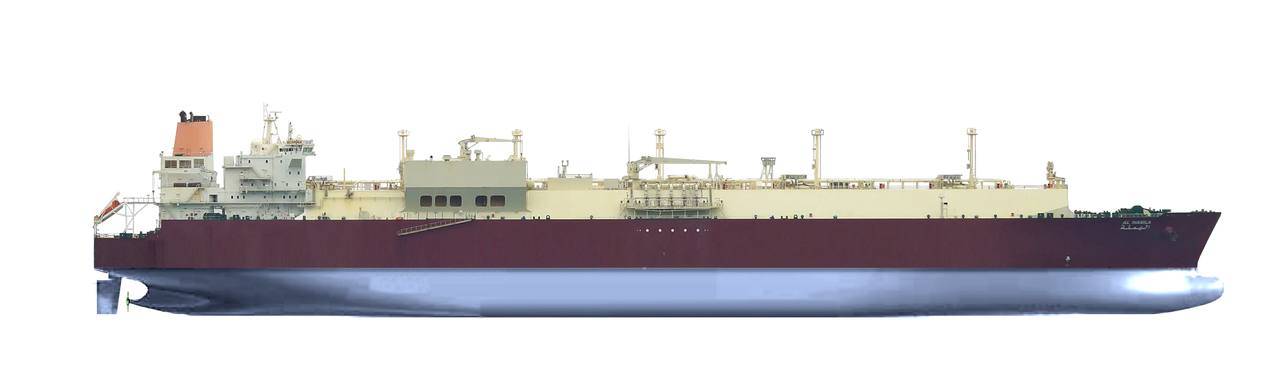
Saudi Aramco has hired Wall Street advisory firm Evercore to explore a restructuring that would carve its natural gas business into a standalone division — a potential Aramco gas unit spinoff that could be worth more than $100 billion, Bloomberg News reported Saturday. The plan, developed with Boston Consulting Group under the internal code name "Project Gamma," would separate the state oil giant's fast-growing gas operations from its crude empire and open the door to outside investment or a future stock listing. If it happens, it would rank among the largest corporate carve-outs in energy history — and it would mark the moment Riyadh decided that natural gas, not just oil, is a crown jewel worth pricing on its own.
Why this matters
This is not a routine reorganization. Aramco is the world's most valuable energy company and the financial engine of Saudi Arabia; when it redraws its own corporate map, global energy markets have to redraw theirs too. A standalone gas division would let investors value Aramco's gas business the way they value pure-play LNG companies — on its own cash flows, its own growth, its own balance sheet — instead of as a footnote inside an oil colossus. That repricing could unlock tens of billions of dollars in value, which is precisely the point: the kingdom needs money. Vision 2030's giga-projects, a costly regional war that has disrupted shipping through the Strait of Hormuz, and years of lower-for-longer fiscal pressure have left Riyadh hunting for capital without surrendering control of its oil. Selling slices of the gas business — while keeping the crude machine firmly in state hands — is the elegant solution. It also signals where Aramco thinks the next decade of energy growth lives: not in pumping more barrels, but in gas, LNG, and the petrochemical feedstocks the world will keep buying even as oil demand plateaus.
What was actually reported — and what wasn't
Precision matters here, because this story currently rests on a single original report. Bloomberg News reported on Saturday, September 26, citing people familiar with the matter, that Aramco has hired Evercore to advise on a restructuring creating a standalone gas division that could eventually be listed. Reuters carried the report the same day, noting that Boston Consulting Group had also advised Aramco to split off its gas operations in an effort dubbed Project Gamma, as a way to unlock more value. According to the report, a split could bring new investment into the gas unit or lead to an initial public offering or minority listing valuing the business at more than $100 billion. Three caveats, all from the same reporting: deliberations are continuing and the plans could change; no final decisions have been made; and Aramco, Evercore, and BCG all declined or did not respond to requests for comment. That is the responsible way to read this — a serious, well-sourced plan under active consideration, not a done deal. Separately, Reuters reported earlier in the week (September 22) that Aramco was already planning to reorganize around a new gas division that would serve as a focused platform for developing domestic gas resources and building a liquefied natural gas portfolio abroad. The Bloomberg report is best understood as the next step in a strategy already in motion.
Project Gamma and the $100 billion question
Is a gas business inside Aramco really worth $100 billion? The number is plausible, and the comparison that makes it vivid is Sabic. Aramco's listed chemicals unit, Sabic, has seen its share price fall more than 20 percent over the past year — yet bankers reckon the gas unit could be worth roughly three times Sabic's market value, and more than the nearly $70 billion Aramco paid to acquire Sabic in 2020. What would investors actually be buying? A gas machine of genuine scale: the Jafurah unconventional field alone — the largest liquid-rich shale gas play in the Middle East, holding an estimated 200 trillion cubic feet of gas — is being developed at a cost of around $110 billion, with production targeted at 2 billion cubic feet per day by 2030. Aramco has said it wants to lift overall gas output by more than 50 percent over 2021 levels by 2030, with the first phase of Jafurah already coming on stream. Add the South Ghawar unconventional development, now processing 300 million cubic feet a day, plus a growing LNG trading and investment portfolio — including a stake in EIG Partners' MidOcean Energy — and you have a business with its own growth story, its own capital needs, and arguably its own investor base. Evercore is a telling choice of adviser: the boutique investment bank worked on Aramco's record-breaking 2019 IPO, so it knows the company's politics and its shareholder base intimately.
How we got here: from oil company to energy holding company
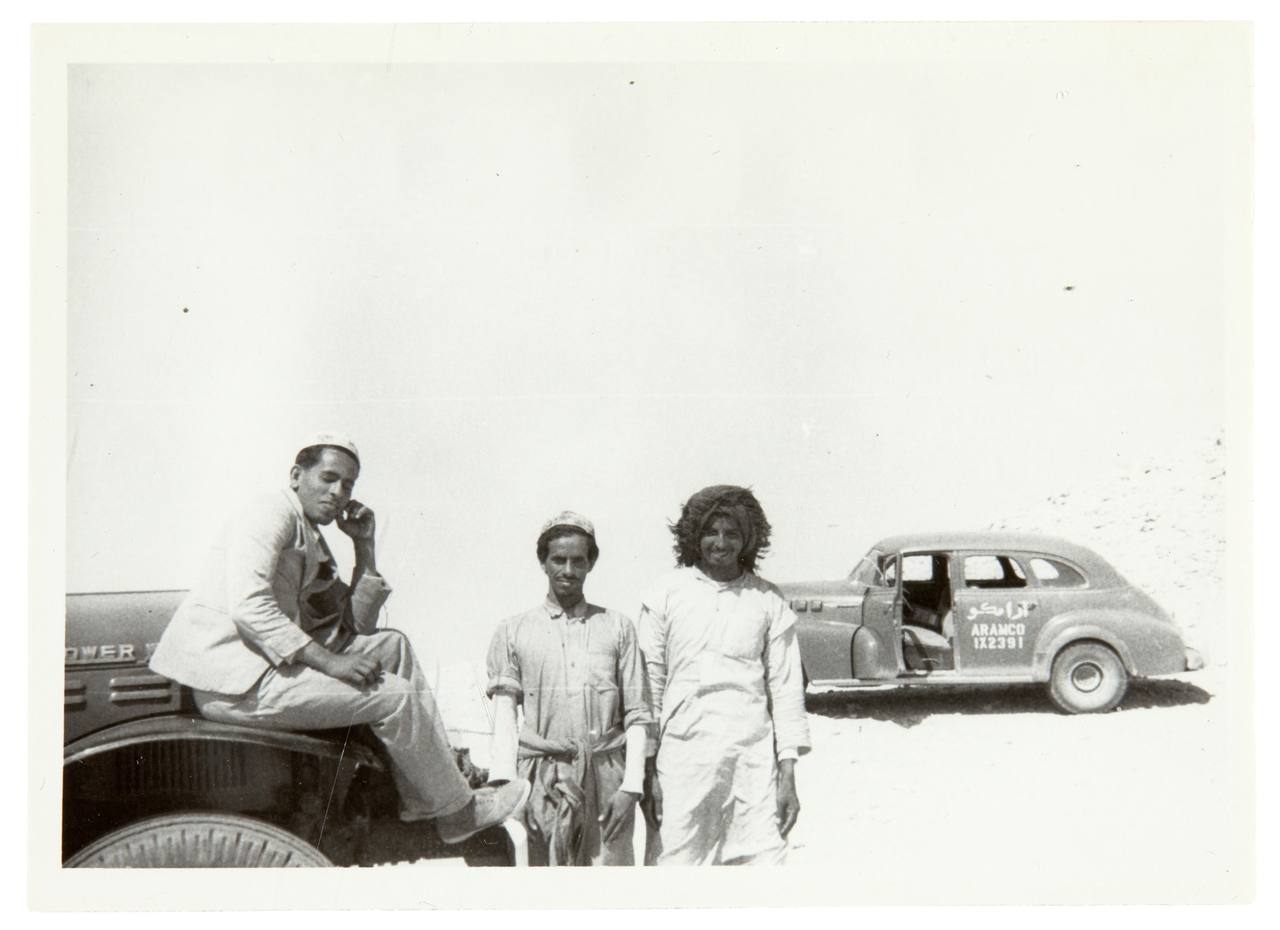
Aramco spent most of its history as, functionally, an oil company that happened to produce gas. Associated gas came out of the ground with the crude, was burned or reinjected, and barely registered as a business. Three things changed. First, the 2019 IPO forced Aramco to think like a listed company — about investor narratives, sum-of-the-parts valuation, and which assets earn their cost of capital. Second, the kingdom's fiscal math deteriorated: Vision 2030's $1.25 trillion project pipeline, OPEC+ output restraint to defend prices, and now a regional war that has forced Aramco to reroute exports through the Red Sea port of Yanbu, have all squeezed cash flow. Aramco is now openly seeking to sell up to $35 billion in assets, improve efficiency, and cut costs. Third, gas got strategic. Europe's scramble to replace Russian pipeline gas, Asia's relentless LNG demand growth, and the Hormuz disruptions — Kpler data shows just 33.7 million barrels of oil transited the strait in a recent week versus 49.2 million the week before — have made reliable Gulf gas a geopolitical asset. The Gulf carve-out playbook is already proven: ADNOC has listed drilling, logistics, and gas units while keeping control; QatarEnergy sells stakes in LNG trains to fund expansion. Aramco is simply applying the same logic to a much bigger prize.
Who wins, who loses, and what the skeptics say
Start with the winners. Aramco itself: a separately valued gas unit could raise capital more cheaply, fund Jafurah's enormous build-out off the parent's balance sheet, and give management cleaner incentives. Saudi Arabia's Public Investment Fund and the Vision 2030 project pipeline: every dollar raised from a gas stake sale is a dollar that doesn't have to come from oil dividends or debt. Global gas investors — sovereign wealth funds, infrastructure funds, Asian utilities — who have been locked out of Aramco's core now get a door in. And LNG buyers in Asia and Europe gain a more commercially aggressive Gulf supplier at a moment of tight markets. The losers are harder to name, which is why the skeptics deserve airtime. Valuation skeptics point to Sabic: Aramco paid top dollar in 2020 and the asset has underperformed since; a gas IPO launched into a weak market could repeat the pattern in reverse, selling cheap what the kingdom might later regret parting with. Governance skeptics note that a "standalone" Aramco unit would still answer to the same state shareholder — minority investors would own economics, not control. And timing skeptics ask the blunt question: with a regional war disrupting Gulf shipping and oil markets in turmoil, is this the moment to ask public markets to price a $100 billion asset? The honest answer is that Aramco may not need public markets at all — a private minority sale to sovereign funds could deliver the cash without the scrutiny.
The numbers, in context
Context turns a headline number into understanding. Aramco shares closed on the Saudi Exchange on Sunday at SAR 25.82, up 0.16 percent on the day — a muted reaction suggesting the market had partly anticipated the move after Reuters' earlier report — and roughly 8 percent below the stock's 52-week high, reflecting war-related caution. The shares trade at about 13 times earnings with a dividend yield near 5.4 percent, on a market capitalization of roughly SAR 6.5 trillion: the gas unit at $100 billion would be a sliver of the whole, but larger than most independent energy companies on earth. Aramco's parallel $35 billion asset-sale program — spanning real estate and stakes in export terminals — shows this is a systematic capital-raising campaign, not a one-off. And the gas growth targets are aggressive: an 80 percent increase in gas output by 2030, $15 billion in incremental annual operating cash flow, and a million barrels a day of crude freed from domestic power generation for export. If even half of that materializes, the "gas is a footnote" era is definitively over.
What happens next: three scenarios
Scenario one — the base case — is a private minority stake sale within 12 to 18 months: Aramco sells 10 to 20 percent of the gas unit to a consortium of sovereign wealth and infrastructure funds, raising $10–20 billion while keeping full operational control, exactly as the Gulf playbook prescribes. Scenario two is the headline-grabber: a full or partial listing, on the Tadawul or an international exchange, that would instantly become one of the largest energy IPOs ever and give the gas business its own currency for acquisitions. Scenario three is the quiet death: the war escalates, oil prices spike, fiscal pressure eases, and Project Gamma joins the long file of Aramco studies that never left the drawer. Which one wins depends on two variables Aramco doesn't control — the trajectory of the Iran conflict and the appetite of global capital for Gulf assets. Watch the advisers: as long as Evercore and BCG stay engaged, the project is alive. The moment to take this story seriously was Saturday, when Bloomberg's sources spoke. The moment to judge it will come when Aramco itself does.