Andy Burnham Labour conference speech
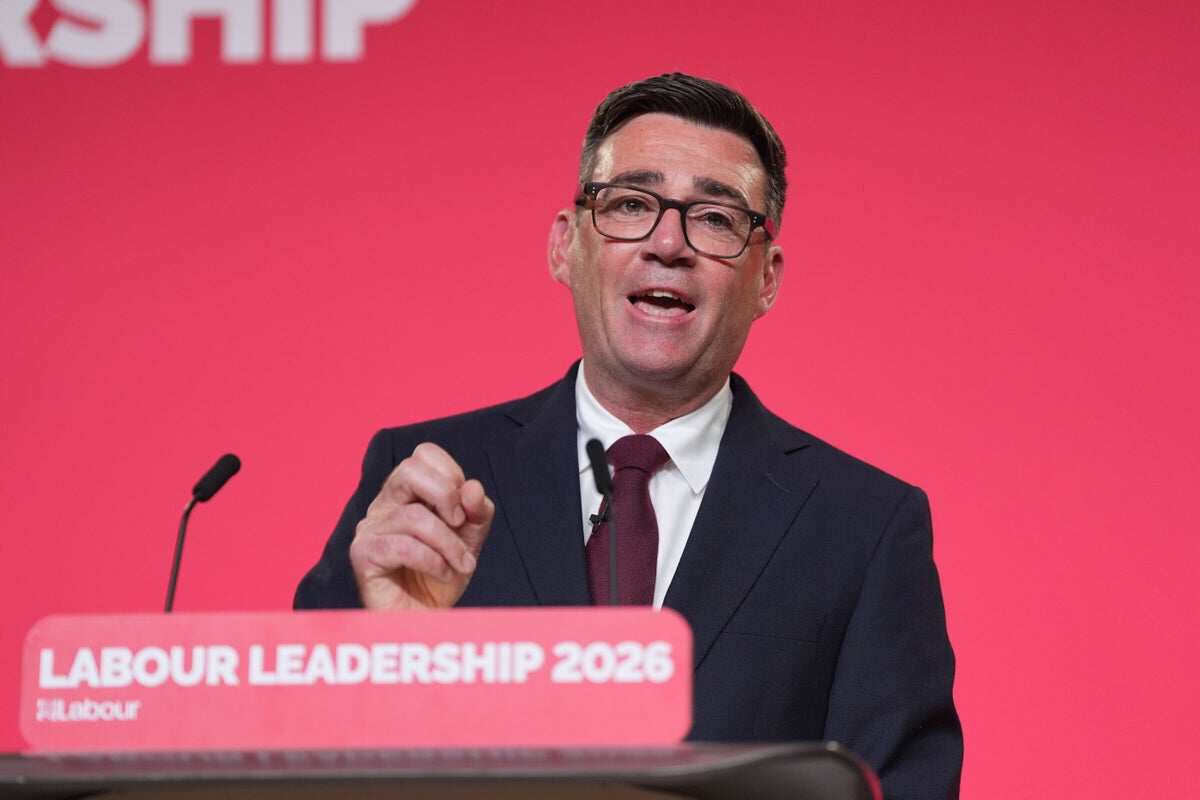
LIVERPOOL — The Andy Burnham Labour conference speech declared that Brexit had done “more harm than good,” promised the country a choice of closer relationships with the European Union around a November summit, and tied reform of the state pension triple lock to a National Care Service free at the point of use. It was Burnham's first conference address as Labour leader and prime minister after the Keir Starmer resignation July 2026 — less a victory lap than a bid to redefine Labour's economic and constitutional settlement.
Burnham said the government would seek consensus before setting out its preferred European arrangement. The wording matters. A sitting prime minister was no longer asking only how to improve the existing trade deal; he was inviting debate about the model of the relationship itself. A decade after the referendum, that breaks a central taboo in Westminster.
Brexit “more harm than good”: why the sentence changes the argument
For years, both major parties treated the fundamentals of Brexit as fixed. Starmer's 2024 election platform promised a reset with Brussels while ruling out the single market, the customs union and freedom of movement. Burnham's speech did not announce that Britain would rejoin any of those structures. It did something politically prior: it said the damage from leaving should be weighed openly against the constraints of moving closer.
That distinction is easy to miss. A veterinary agreement, mutual recognition of qualifications or easier youth mobility can reduce friction without recreating membership. A customs union could remove many rules-of-origin burdens on goods but limit Britain's freedom to set an independent tariff schedule. Single-market participation could go further for goods and services, while bringing broader obligations on regulatory alignment, budget contributions and movement. Each rung up the ladder offers more economic integration in exchange for less unilateral discretion.
The Office for Budget Responsibility's standing model assumes the post-Brexit trading relationship will leave UK trade intensity 15% lower and potential productivity 4% lower in the long run than if Britain had remained in the EU. Those are modeled counterfactuals, not directly observed facts, and critics argue the methodology overstates damage by attributing weak outcomes to Brexit rather than the pandemic, energy shock and wider productivity malaise. Burnham's burden is therefore not merely to say Brexit failed, but to show which alternative would produce measurable gains after its political and regulatory costs.
UK EU summit November 2026: the first test
The planned July summit was postponed, making the UK EU summit November 2026 the first major set-piece for Burnham's reset. The most plausible near-term outcome is a menu rather than a dramatic settlement: defence and security cooperation, measures to ease food and agricultural trade, professional mobility, and a framework for harder negotiations. European governments will want to know whether London can sustain alignment across changes of government, not merely offer warmer language.
A UK EU migration pact would be the most politically combustible possibility. Burnham said Brexit had not delivered control, opening space for a bargain that could link returns, legal routes or youth mobility to wider cooperation. The potential winner is an overwhelmed asylum system if returns become faster and rules clearer. The risk is that any reciprocal movement deal is sold by Reform UK as freedom of movement by stealth, even if its scope is narrower.
Businesses that trade across the Channel, pro-European campaigners and younger voters stand to gain most from reduced friction. Starmer-era critics who said Labour's red lines were self-defeating will also claim vindication. Brexit supporters, however, will see the same shift as a threat to regulatory autonomy, and Conservatives can fairly demand details on jurisdiction, budget payments, border control and the right to make independent trade policy before any option is endorsed.
Pension triple lock axed after the election — and a care bargain
Burnham paired the European pivot with a generational bargain at home. Labour would protect the existing triple lock through this parliament, then from 2030 raise the state pension by inflation or 2.5%, while maintaining its value relative to earnings over time. In shorthand, the pension triple lock axed pledge means replacing the highest-of-three formula — earnings, prices or 2.5% — rather than freezing pensions.
The political danger is immediate. The OBR has estimated that the triple lock will add £15.5 billion a year to state-pension spending by 2030, about three times the original forecast. But the Institute for Fiscal Studies said reform would save only hundreds of millions over the next parliament and warned that a universal care promise would probably still require substantial tax rises. For pensioners near the poverty line, even a slower uplift can matter; critics are right to demand distributional protections rather than treat all retirees as equally wealthy.
The proposed National Care Service UK offer would be free at the point of use in the next parliament and, in Burnham's phrase, “as important as the NHS itself.” Its strongest case is that social care's means test creates a disease lottery: someone with cancer receives health care free, while someone with dementia can face large personal costs. The Health Foundation's modeling, cited by care-sector reporting, places a Scottish-style offer at roughly £6.5 billion of additional spending in its first full year and a comprehensive universal model at about £18.5 billion extra by 2035-36. Those are scenario estimates, not a settled bill for Burnham's still-undeveloped plan.
The winners would include disabled adults, families providing unpaid care, and older people with substantial needs. The fiscal losers are harder to identify until Labour publishes tax and eligibility detail. That is why Conservative leader Kemi Badenoch's core criticism — that pension reform alone cannot finance the promise — deserves an answer even if her “back to the 1970s” framing is ideological. Liberal Democrat leader Ed Davey likewise argued that social care is too urgent to delay until after another election.
Great British Grid, water ownership and the state
Burnham's economic programme also promised a publicly owned Great British Grid, repeal of the Thatcher-era ban on public ownership of water companies, and new mayoral powers. The organizing idea is that natural monopolies should be judged by investment, resilience and bills rather than by whether ownership is formally public or private.
That agenda can appeal to voters frustrated by sewage failures and slow grid connections, but public ownership is not free. Taking over distressed utilities can transfer financing and operational risk to taxpayers. The more credible test is whether Labour publishes asset-valuation rules, debt treatment, governance safeguards and an investment plan — not whether it wins applause for the word “public.”
Burnham also promised landlord measures before Christmas, including stronger protections for tenants and limits on abusive practices. Renters could gain security; responsible landlords face new compliance costs; and poorly designed rules could shrink supply. The balance will turn on enforcement capacity and whether construction keeps pace with demand.
Proportional representation UK: promise, process and arithmetic
A national commission on electoral reform would prepare a manifesto choice on proportional representation UK. For Labour members who have pressed for change, that is a breakthrough. It is not yet a bill, a model or a referendum timetable. A commission can create expertise and public legitimacy, but it can also postpone a decision beyond the current parliament.
The parliamentary arithmetic is favorable only in a narrow sense. A Labour majority can establish a commission and legislate if ministers stay united. The harder problem is partisan incentive: first-past-the-post can still deliver Labour a majority, while proportional systems usually require coalition bargaining. Smaller parties would gain from a seat share closer to their vote share; MPs in safe seats and party managers accustomed to winner-take-all politics could lose power.
Conservatives called the proposal an attempt to rig the system. That charge is too broad — no system is neutral, and a transparent commission is not itself a result — but it points to a real legitimacy test. Changing election rules should require clear public evidence, stable principles and scrutiny that is visibly independent of the governing party's short-term advantage.
Labour conference 2026 Liverpool: the room and the foreign-policy signals
The Labour conference 2026 Liverpool diary showed both the reach and the tensions of Burnham's coalition. Union and think-tank responses were broadly warm: the GMB praised the policy range but urged delivery, USDAW welcomed the care proposal while demanding funding detail, and IPPR said the care-and-pensions trade-off deserved serious consideration. Unite leader Sharon Graham called the triple-lock change the wrong lever and argued that wealth should bear more of the burden.
On security, Burnham reaffirmed support for Ukraine and NATO, limiting the scope for opponents to portray closer EU ties or domestic intervention as a retreat from Britain's alliances. The government's message was continuity in collective defence combined with greater willingness to coordinate with Europe.
The Middle East exposed a more delicate coalition. No cabinet ministers attended the Labour Friends of Israel reception, while Foreign Secretary Ed Miliband told Labour Friends of Palestine that “the only route to peace is two states” and told activists, “we hear you, you were right.” The Ed Miliband two states intervention reinforced Labour's diplomatic line while acknowledging anger inside the party. It followed a week in which foreign policy was also shaped by Burnham's meeting with Donald Trump around the UN General Assembly and by Britain's new Gaza aid package.
Who wins, who loses — and what happens next
The speech's political wager is that candor can connect policies usually treated as separate: closer European ties for growth, a slower pension ratchet to fund care, public control of infrastructure, and electoral reform to rebuild trust. Younger voters, cross-border businesses, care recipients and pro-EU Labour members are the clearest potential winners. Pensioners who would have received a higher triple-lock increase, landlords facing stricter rules, private utility investors and voters who prioritize Brexit sovereignty carry the most obvious risks.
Reform UK's attack will be simple: Burnham is undoing Brexit and picking a fight with pensioners. Nigel Farage called the pensions plan an “offensive against our elderly.” That criticism can cut through because the lost counterfactual pension increase is easier to understand than the future value of a care service. Labour's response must therefore be concrete: who qualifies, when care becomes free, what the full cost is, and how low-income pensioners are protected.
Three November scenarios now matter. In the cautious case, Britain and the EU agree on security cooperation and technical trade easements while postponing institutional choices. In the middle case, Burnham proposes limited mobility and deeper rules alignment in exchange for market access. In the bold case, he begins building consent for a customs-union or single-market-style arrangement, inviting a national confrontation over sovereignty before the next election.
The Conservative response will try to unite fiscal skepticism with Brexit loyalty; Reform will apply pressure from the right; Liberal Democrats and Greens will argue Burnham has not gone far enough on Europe or constitutional change. Public opinion may reward the ambition if growth and services improve, but it could punish Labour if a migration pact, pension reform or tax rise arrives before visible gains. The prime minister has opened several large fronts at once. November will show whether that is a governing strategy or simply a conference coalition.
Sources and methodology
This analysis draws on contemporaneous reporting and primary economic assessments. Policy announcements and quotations were cross-checked against Reuters on the EU relationship, Reuters' policy roundup, The Times' conference live report and LabourList's reaction roundup. The Brexit estimates are the OBR's assumptions, explained in its forecasting assessment. Cost ranges for care are attributed to the Health Foundation modeling cited by The Care Home Environment. Estimates are presented as scenarios rather than settled government costings.