AMD World Labs acquisition
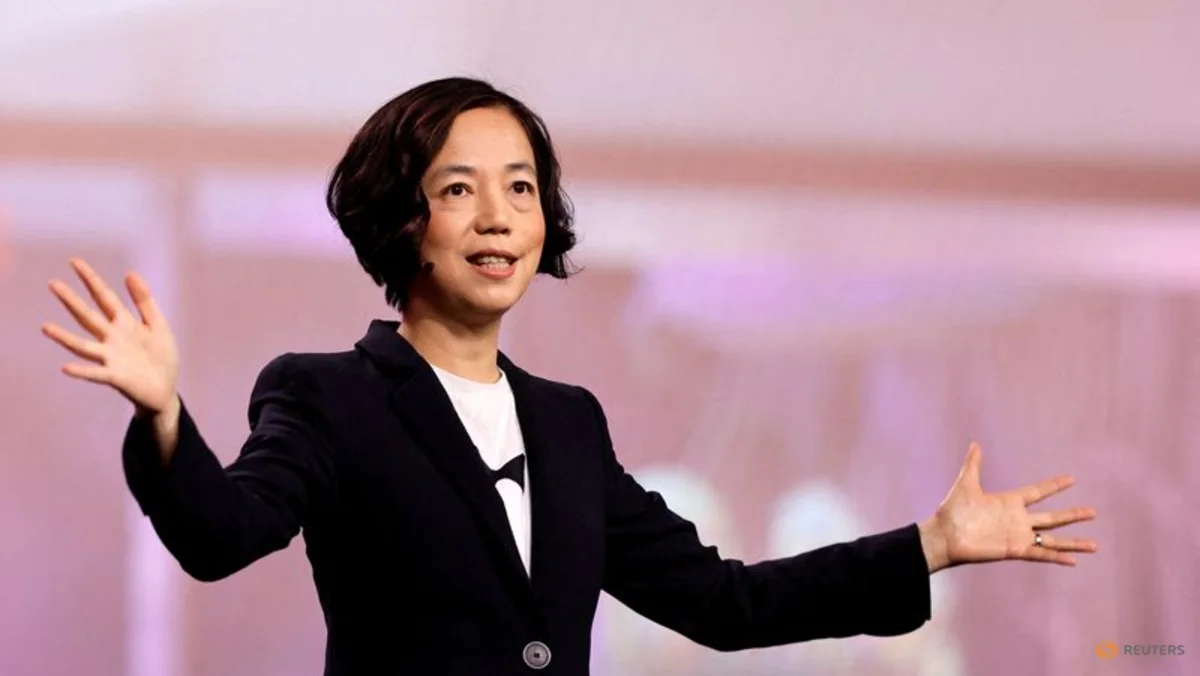
AMD agreed to buy World Labs in a definitive all-stock transaction announced Monday, September 28. AMD's official announcement values the deal at about $8.2 billion and says it should close by the end of 2026, subject to regulatory approvals and customary conditions. Reuters, via the Los Angeles Post, and TechCrunch independently reported the same central terms.
If the deal closes, World Labs founder Fei-Fei Li will become AMD executive vice president and chief scientist, reporting directly to chair and CEO Lisa Su. Li wrote on LinkedIn, as quoted by Reuters, that the companies began a deep technical partnership last year around model training and inference optimization on AMD GPUs. Their relationship was financial as well: AMD invested in the $1 billion round World Labs raised earlier this year.
Those are the facts. The interpretation is more provocative: AMD is using a historically strong share price to buy its way closer to the research frontier, betting that the next defining workloads will be spatial rather than conversational. It is not buying a mature revenue engine. It is buying the ability to see the next computing problem before rivals do.
Why this matters: AMD is buying a view of future compute
Semiconductor companies usually learn what software needs after customers bring them bottlenecks. World Labs offers AMD the inverse: a model laboratory inside the company, discovering the bottlenecks while the architecture is still being invented. If the lab's world models demand more memory bandwidth, different numerical formats, faster links among accelerators or tighter coupling between training and simulation, AMD's silicon teams can respond before procurement data makes the trend obvious.
That is the deeper significance of the AMD World Labs acquisition. It shortens the feedback loop between frontier research and chip design. Lisa Su has already pushed AMD from a processor challenger into a broad AI-compute contender. Li gives that effort a scientific center of gravity and a direct view into workloads that may define robotics, industrial simulation, digital twins, design tools and autonomous machines.
There is also an industrial-strategy angle. Today's generative AI stack is heavily shaped by Nvidia's hardware, CUDA software and developer ecosystem. AMD cannot break that grip with faster accelerators alone. It needs workloads, models and researchers that make ROCm and Instinct systems the natural place to build. Owning a respected world-model lab is a way to create that pull rather than merely waiting for it.
From ImageNet to spatial intelligence AI
Li's importance predates the current AI boom. Her leadership on ImageNet helped give computer vision the large, labeled dataset and benchmark competition that catalyzed the deep-learning breakthrough of the early 2010s. ImageNet did not invent neural networks, but it helped prove that scale, data and compute could transform machine perception. That legacy explains why this is more than a conventional startup acquisition: AMD is recruiting a researcher whose career has repeatedly connected new learning problems to new computing demands.
World Labs, founded in 2024, extends that thesis from recognizing images to reasoning about environments. Its models are designed to generate, reconstruct and simulate interactive 3D spaces from text, images and video. The startup calls the field spatial intelligence: an attempt to give AI a persistent sense of geometry, objects, motion and cause-and-effect rather than a sequence of words or a flat picture.
TechCrunch describes Marble, the company's first product, as a way to create entertainment environments and simulated settings for robot training. The phrase World Labs Marble robot training captures the commercial promise, but not its maturity. Marble is a real product; the broader vision—robots learning reliable physical behavior inside generated worlds before acting in factories, warehouses or homes—remains substantially unshipped and unproven at scale.
The $1 billion financing earlier in 2026, which included AMD, signaled that investors were willing to fund that uncertainty. The acquisition price now prices the uncertainty far more aggressively. World Labs is young, its category is still forming, and much of the value sits in people, intellectual property and expectations rather than a long public record of revenue or deployments.
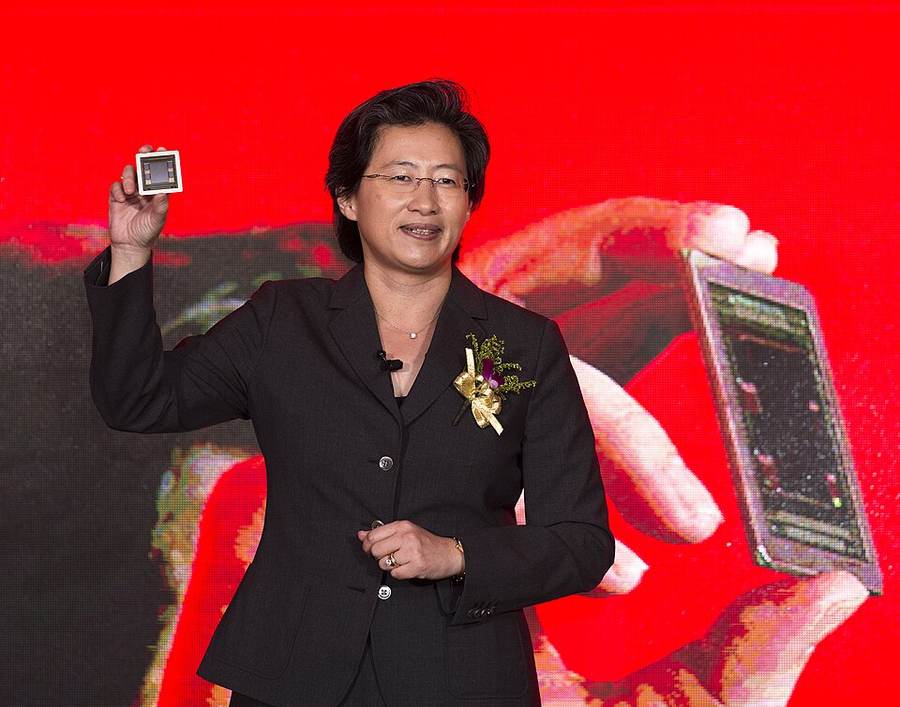
AMD vs Nvidia AI race moves into physical AI chips
The AMD vs Nvidia AI race is no longer only a contest over training large language models. Nvidia has spent years assembling a physical-AI platform: Cosmos world models, Isaac robotics tools, Omniverse simulation and the hardware beneath them. Its recent roughly $13 billion agreement for Hugging Face added another major developer and model-distribution layer. Against that backdrop, the World Labs 8.2 billion deal looks less like a side bet than AMD's answer to vertical integration.
AMD's potential advantage is openness. Su and Li are presenting the combination as an end-to-end open ecosystem across hardware, software, platforms and models. If developers can move models freely and avoid a single proprietary stack, AMD could win projects that want bargaining power and portability. But “open” must become a dependable toolchain, not a slogan. Nvidia's lead is reinforced by software habits, documentation, trained engineers and years of production use.
The best case for AMD is that physical AI chips become a distinct growth market, with world models demanding huge volumes of simulation during training and low-latency inference at the edge. The best case for the robotics sector is more competition: two well-capitalized chip platforms, each investing in models and simulation, could reduce dependence on a single supplier and accelerate standards for interoperable environments.
The skeptical case is simpler. Hardware demand does not automatically follow from elegant research. A generated 3D world can be visually convincing yet physically unreliable; robots trained in simulation can fail when lighting, friction, clutter or human behavior differ from the model. The hard problem is not merely rendering worlds. It is making those worlds accurate enough that mistakes do not migrate into real machines.
Who wins—and who carries the risk
AMD wins strategic access. World Labs can expose emerging requirements for memory, networking, compilers and accelerators while those requirements are still fluid. That intelligence may matter as much as any individual product. It complements AMD's existing effort to turn competitive chips into complete systems.
Li and her researchers gain scale. The Fei-Fei Li AMD chief scientist role gives World Labs access to hardware engineering, capital and distribution that a startup could not easily replicate. The Lisa Su–Fei-Fei Li partnership also elevates scientific leadership inside a public semiconductor company, potentially giving researchers more influence over the roadmap than a supplier relationship would.
Robotics developers gain another heavyweight platform. If AMD funds open models and strong tooling, teams building machines could have more leverage on hardware prices and less platform lock-in. The phrase world models robotics chips sounds speculative today, but it names a plausible new category where simulation demand and embodied inference meet.
AMD shareholders absorb dilution and execution risk. This is an all-stock deal, so AMD is not wiring $8.2 billion in cash. It is issuing equity. The final economic value moves with AMD's share price and the agreement's pricing mechanics; a rising stock can make stock-financed ambition cheaper in strategic terms, while a falling one can alter the effective share cost and market reaction. Either way, existing investors are giving up a slice of future ownership for a company whose commercial output is still early.
World Labs customers and partners face integration questions. A lab owned by AMD may be less neutral to companies built around Nvidia hardware. Researchers may also discover that quarterly expectations, product deadlines and platform priorities constrain the freedom that made the startup attractive. Retaining scarce talent after vesting milestones is a central risk in any research-heavy acquisition.
Data context: why $8.2 billion is a moving number
The AMD all-stock acquisition 2026 headline is anchored at approximately $8.2 billion, but stock is not cash. AMD's announcement describes the value at signing; the ultimate number of shares and market value depend on deal mechanics and AMD's trading price around closing. Investors should treat $8.2 billion as the announced valuation, not a fixed cash outlay sitting in escrow.
The comparison with Nvidia's approximately $13 billion Hugging Face deal clarifies scale. Both transactions reflect an industry willing to pay billions for developer reach, model expertise and strategic control upstream of chip sales. Nvidia's deal is larger, but AMD's price is striking relative to World Labs' age and the $1 billion round it completed only months earlier. The premium says talent and position matter more here than audited revenue history.
That premium can be rational if World Labs materially improves AMD's hardware roadmap across several generations. It can also become a costly monument to a fashionable thesis if spatial models remain niche, if robotics adoption moves slowly, or if the strongest researchers leave. The acquisition does not eliminate those possibilities; it concentrates them on AMD's balance sheet and share count.
What happens next
The first milestone is regulatory clearance. The companies expect to close by the end of 2026, but that date is a target, not a guarantee. Authorities can ask how the deal affects competition in AI accelerators, access to model research and the neutrality of a startup that has worked across hardware ecosystems. Until approval and closing, AMD and World Labs remain separate companies and Li's AMD appointment is prospective.
The second milestone is organizational. If the deal closes, the lab is expected to continue model research while Li reports to Su. The useful signal will not be a celebratory keynote; it will be whether World Labs' discoveries visibly influence AMD's silicon roadmap—memory hierarchy, interconnects, inference efficiency, simulation tooling and ROCm support—and whether those changes reach shipping products.
The third is evidence from users. Watch for robot-training deployments that transfer successfully from simulated Marble environments to physical machines, for open models that developers can evaluate, and for benchmarks that compare total-system performance rather than isolated chips. Those results would show whether AMD bought a new source of durable demand or simply an expensive narrative.
Our view: the logic is stronger than the optics. A chipmaker competing with Nvidia needs to understand what frontier models will require, not just reproduce today's accelerators. But the price leaves almost no room for complacency. AMD has bought proximity to the future; it has not bought proof that the future will arrive on schedule.
Sources
- AMD official announcement, September 28, 2026 — transaction structure, valuation, leadership and closing conditions.
- Reuters reporting via the Los Angeles Post, September 28, 2026 — partnership history, funding and Li's LinkedIn remarks.
- TechCrunch, September 28, 2026 — World Labs history, ImageNet context and Marble applications.
- Fei-Fei Li's LinkedIn announcement, as quoted and described in Reuters and TechCrunch.
The acquisition has been signed but has not closed. Forward-looking claims about regulatory timing, product benefits and future chip demand remain uncertain. Both photographs are credited file images and do not depict the September 2026 signing.